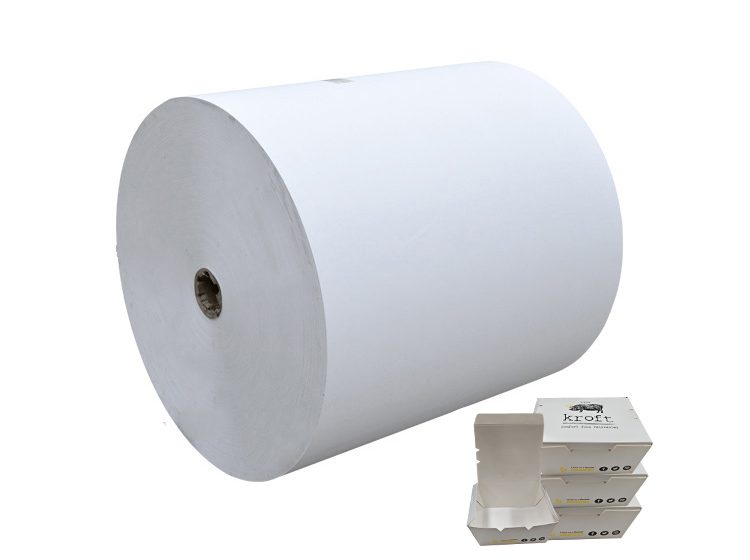

Small beverage cups have an important place in cafés, restaurants, offices, catering operations, and promotional events. They are often used for espresso, tasting portions, samples, and other servings where a full-sized cup would be unnecessary. A 4oz paper cup is one practical format for these situations, and its manufacturing begins with a fan-shaped paper blank designed for the required cup dimensions.
Businesses sourcing a 4oz Paper Cup Fan should consider more than the nominal capacity. The fan’s dimensions, paper grade, coating, printing, and compatibility with forming machinery all affect the finished cup. A well-matched blank can support a consistent production process and a uniform final appearance.
Understanding the 4oz Cup Format
A 4oz cup is a compact disposable container commonly used for small beverage servings. It may be suitable for espresso portions, tasting samples, water stations, or limited-volume drinks, depending on the business’s needs.
The stated capacity is only one part of the product specification. Cup height, top diameter, bottom diameter, sidewall angle, and rim design also determine the final shape.
Manufacturers should confirm the actual cup dimensions before ordering fan blanks. Different cup designs may have similar capacities but use different dimensions and forming requirements.
What Is a 4oz Paper Cup Fan?
A paper cup fan is a pre-cut blank shaped to form the sidewall of a cup. Its curved outline is designed to wrap into the intended cup shape.
During manufacturing, the fan is fed into a forming machine, rolled into position, and joined along its side edges. A separate bottom component is then inserted and sealed to complete the cup.
For a 4oz cup, the fan must match the small format accurately. Incorrect dimensions may affect the side seam, overall shape, and alignment with the bottom component.
Choosing the Right Paper Grade
The paper grade influences how the fan behaves during cutting and forming. Buyers should review the grammage, thickness, stiffness, and surface characteristics of the material.
A smaller cup does not automatically require the lightest available paper. The correct grade depends on the intended beverage, cup design, forming equipment, and required handling characteristics.
Manufacturers should request technical information from suppliers and compare samples. A production trial is especially useful when introducing a new paper grade or changing an established specification.
Coating for Beverage Use
Paper absorbs moisture, so many disposable beverage cups use a barrier coating. Polyethylene is a common option in conventional cup materials, although other barrier systems may also be available.
The coating arrangement should match the intended application. Buyers should check whether the material is coated on one or both sides and confirm the coating weight.
A 4oz cup used for hot espresso may have different performance requirements from one used for chilled samples or water. The finished cup should be tested under the actual temperature and contact conditions.
Food-contact documentation is also important. Ask suppliers for applicable declarations and test information covering the material construction and intended use.
Printing Opportunities for Compact Cups
Small cups can still provide useful branding space. Businesses may print logos, short promotional messages, product names, or simple visual elements on the fan before it is converted into a finished cup.
Because the available surface is limited, artwork should be carefully planned. Large logos or detailed graphics may need to be simplified so that the design remains clear after forming.
Text should be positioned away from areas affected by the side seam and cutting edges. A printed sample can help confirm that the artwork appears in the intended position.
Production Accuracy Matters
Small-format cups require precise coordination between the fan and bottom component. Manufacturers should check the fan’s cutting accuracy and confirm that it matches the machine settings.
During production, observe whether the blank feeds consistently, whether the side seam forms correctly, and whether the bottom disc fits securely. Finished cups should be inspected for shape, rim condition, and leakage performance.
Common production issues can include misaligned blanks, uneven seams, incorrect bottom positioning, and inconsistent cup dimensions. These problems may result from material variation, incorrect machine settings, or a mismatch between the blank and the equipment.
Where 4oz Cups Are Commonly Used
Coffee service: Small cups can be used for espresso and other limited-volume coffee servings.
Product sampling: Food and beverage businesses may use compact cups when offering samples at events or promotional activities.
Catering: Small servings can be convenient for tasting stations, conferences, and catered functions.
Office and hospitality settings: Compact cups may be used where limited-volume drinks or water servings are required.
The appropriate material specification depends on the actual beverage and service conditions.
What to Confirm With a Supplier
Before ordering, provide the exact cup dimensions, paper requirements, coating details, printing artwork, and expected order quantity. Ask about available specifications, minimum order quantities, sample availability, and delivery lead times.
A reliable supplier should be able to explain the material characteristics and provide technical data. It is also useful to agree on a reference sample and written specification for repeat purchases.
Storage and Quality Management
Keep paper fans in clean, dry storage and protect them from dust, moisture, and physical damage. Inspect incoming batches for dimensional consistency and visible defects.
Maintain records of accepted samples and production trial results. These records can help identify changes in later deliveries and support more predictable purchasing.
A Small Cup With Specific Material Needs
A 4oz paper cup fan is designed for a compact beverage format, but its small size does not make material selection less important. Accurate dimensions, suitable paper, appropriate coating, and reliable converting performance all contribute to the finished cup.
By confirming specifications and testing samples on the intended equipment, manufacturers can produce compact cups with more consistent quality and a suitable appearance for their business applications.