


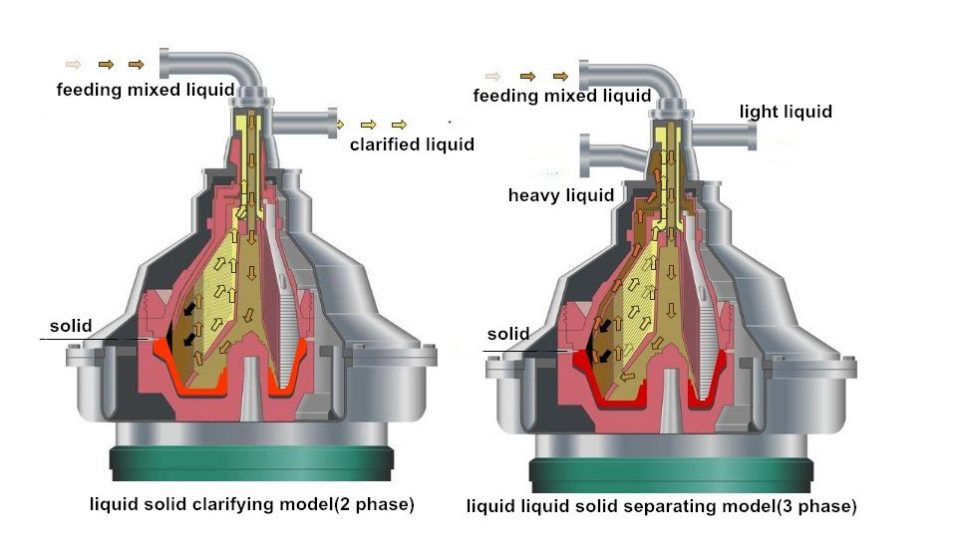

Disc stack centrifuges are widely used for continuous separation of suspended solids and liquid phases in industrial processes. Their high rotational speeds and compact separation zones allow them to handle demanding applications, but consistent performance depends on correct operation and maintenance.
A Disc Stack Centrifuge can experience performance issues when feed conditions, operating parameters, or maintenance practices are not properly controlled. Understanding these common challenges helps operators identify problems early and maintain reliable separation.
Inconsistent Feed Conditions
Changes in feed flow rate, viscosity, temperature, or solids concentration can affect separation performance. A centrifuge configured for one set of conditions may produce different results when the incoming material changes significantly.
Sudden increases in solids concentration can also increase the load on the bowl and require more frequent solids discharge.
Excessive Vibration
Vibration is an important operating concern for high-speed centrifugal equipment. It may result from an unbalanced bowl, uneven solids accumulation, worn bearings, improper installation, or other mechanical issues.
Operators should not ignore unusual vibration. Monitoring vibration levels and investigating significant changes can help prevent more serious mechanical problems.
Reduced Separation Efficiency
Poor separation may occur when the feed rate is too high, the feed properties have changed, or operating parameters are not suitable for the application.
Fine particles can be particularly difficult to remove, while liquids with similar densities may require carefully controlled conditions. Reviewing feed characteristics and operating settings is often an important first step when separation quality declines.
Solids Accumulation
When processing feeds with significant amounts of suspended solids, material can accumulate inside the bowl. If solids are not discharged at appropriate intervals, they may interfere with normal flow and reduce separation efficiency.
Automatic discharge systems can reduce manual intervention, but their settings still need to correspond to the actual solids load and characteristics of the feed.
Temperature and Viscosity Changes
Temperature fluctuations can change the viscosity of the processed liquid. Higher viscosity may make it more difficult for particles or liquid droplets to migrate through the separation zone.
Maintaining stable feed temperature where appropriate can therefore contribute to more predictable performance. Any temperature control strategy should remain within the limits of both the equipment and the process material.
Feed Pressure Fluctuations
Unstable feed pressure can result in inconsistent flow into the centrifuge. Rapid changes may affect distribution within the bowl and make separation results less predictable.
Checking pumps, valves, pipelines, and upstream equipment can help identify the source of pressure variations before they affect the entire process.
Seal and Bearing Wear
Seals and bearings are exposed to demanding operating conditions. Over time, wear can lead to leakage, increased vibration, heat generation, or reduced mechanical stability.
Regular inspection and maintenance schedules help detect component deterioration before it develops into an unexpected shutdown.
Incorrect Operating Parameters
Every separation application has different requirements. Running the centrifuge at an unsuitable feed rate, rotational speed, temperature, or discharge frequency can reduce efficiency or place unnecessary stress on the equipment.
Operators should use the manufacturer’s recommended operating limits and adjust settings based on actual process conditions rather than assuming that maximum operating speed or throughput will always provide the best result.
Maintenance-Related Problems
Poor maintenance can gradually affect centrifuge performance even when the process itself remains stable. Contamination, inadequate lubrication, worn components, or delayed inspections may eventually result in mechanical or separation problems.
A structured maintenance program should include routine cleaning, inspection of critical components, vibration monitoring, and replacement of parts according to their condition and service requirements.
Practical Ways to Reduce Operating Problems
Several practices can help maintain stable centrifuge operation:
- Monitor changes in feed composition and flow.
- Keep operating parameters within recommended limits.
- Check vibration and temperature regularly.
- Adjust solids discharge according to the actual solids load.
- Inspect seals, bearings, and other wear components.
- Investigate unusual changes in separation quality promptly.
- Maintain accurate operating and maintenance records.
These measures can help operators distinguish between process-related problems and mechanical issues.
Choosing Equipment for the Application
Many operating challenges can be reduced through appropriate equipment selection. Factors such as feed viscosity, solids concentration, particle size, density differences, required throughput, and desired separation quality should be considered before selecting a centrifuge.
Shenzhou Machinery is one supplier of centrifugal separation equipment, but the important consideration is whether the equipment configuration and control system are appropriate for the specific process.
Conclusion
Common operating challenges with disc stack centrifuges include inconsistent feed conditions, excessive vibration, solids accumulation, reduced separation efficiency, pressure fluctuations, and component wear. Most can be managed more effectively through proper monitoring, suitable operating parameters, and preventive maintenance.
Understanding how process and mechanical conditions affect performance allows operators to respond to problems earlier and maintain more consistent separation. A well-maintained centrifuge, combined with stable feed conditions and appropriate controls, can provide reliable continuous operation across many industrial applications.


