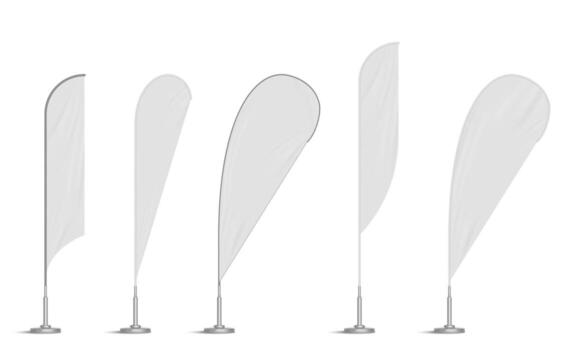

Outdoor advertising gives businesses an opportunity to reach potential customers in places where people naturally gather, shop, travel, and attend events. From storefront entrances and shopping centers to sporting venues and public festivals, well-positioned promotional displays can help a brand attract attention. However, outdoor environments present particular challenges, including changing weather, limited display space, and competition from surrounding signs. Choosing an appropriate advertising format can make a noticeable difference.
A Concave Flag offers a distinctive option for businesses looking to improve the visibility of their outdoor promotions. Its inward-curved profile creates a recognizable silhouette, while its vertical layout provides space for displaying logos, product images, and short marketing messages. When paired with suitable hardware and thoughtful placement, this flag style can support a range of advertising activities.
What Is a Concave Flag?
A concave flag is a type of vertical promotional flag with an inward-curving edge or profile. Unlike standard rectangular banners, its shaped design gives it a distinctive appearance that can help it stand apart from conventional advertising displays.
These flags are commonly made from printed fabric attached to a supporting pole system. Depending on the product design, the structure may include flexible components that help maintain the intended shape.
Their appearance and relatively compact footprint make them suitable for outdoor locations where businesses want to display branding without using large advertising structures.
Why Concave Flags Work Well for Outdoor Advertising
The effectiveness of an outdoor display depends on its ability to attract attention, communicate information, and remain suitable for its surroundings. Concave flags offer several useful characteristics.
A Distinctive Shape That Attracts Attention
The curved profile gives these flags a different appearance from ordinary rectangular banners. This visual distinction can help a promotional display stand out among storefront signs, event materials, and other advertising.
Their shape also provides a recognizable outline that can contribute to a consistent brand presentation when several flags are used together.
Effective Use of Vertical Space
Many outdoor locations have limited room for advertising structures. A vertical flag can make use of available height while occupying relatively little ground space.
This can be useful near shop entrances, exhibition booths, roadside promotional areas, and event walkways, provided the display does not obstruct pedestrian access.
Visibility in Outdoor Conditions
Fabric flags can move with the breeze, creating motion that may draw the attention of people passing by. Their visibility depends on factors such as placement, lighting, surroundings, flag size, and weather conditions.
Choosing suitable fabric and supporting hardware is important for maintaining the intended display shape and performance.
Flexible Branding Opportunities
Concave flags can be customized with business logos, product graphics, brand colors, and concise promotional messages. This makes them adaptable to different campaigns and industries.
Businesses can also coordinate their flag designs with other marketing materials to create a more unified visual identity.
Common Uses of Concave Flags
Their distinctive design and adaptable presentation make concave flags suitable for a variety of commercial and public settings.
Retail Stores and Shopping Areas
Retailers can position promotional flags near entrances to highlight special offers, seasonal collections, product launches, or store branding.
A carefully designed flag can help identify a business from a distance and encourage passing shoppers to notice its storefront. Displays should be positioned without interfering with entrances, accessible routes, or neighboring businesses.
Outdoor Events and Festivals
Festivals and public gatherings often feature numerous vendors, sponsors, and activity areas. Concave flags can help individual businesses distinguish their spaces while contributing to the overall event branding.
Organizers may also use coordinated flags to identify information points, registration areas, and designated sections.
Trade Shows and Exhibitions
Exhibitors need displays that communicate their identity without occupying too much floor space. A concave flag can provide additional brand visibility beside a booth or near an exhibition entrance.
Its distinctive profile can also help visitors recognize a particular exhibitor among several neighboring displays.
Restaurants and Cafés
Food businesses can use outdoor flags to highlight menu items, daily specials, new services, or brand names. A concise message paired with a clear image can make the display easier to understand for people walking past.
For restaurants with outdoor seating, flags may also help identify the business from nearby pedestrian areas.
Automotive and Property Promotions
Car dealerships, property agencies, and service providers often use outdoor promotional displays to attract attention around their premises. Concave flags can highlight sales campaigns, open-house events, new arrivals, or featured services.
Their portability can be useful for businesses that change display locations or update campaigns regularly.
How to Choose the Right Concave Flag
Selecting an appropriate flag involves evaluating more than its visual design. Businesses should consider the display environment, intended audience, installation requirements, and expected frequency of use.
Select the Appropriate Size
Flag size should reflect the available space and the distance from which people are expected to view the display.
A larger flag may be more noticeable in an open outdoor area, while a smaller version may be more appropriate for a compact storefront or event booth. The design should remain readable without overwhelming its surroundings.
Evaluate Fabric Quality
The fabric influences how a flag looks, moves, and performs over time. Businesses should consider material strength, print quality, stitching, and resistance to fading.
For outdoor applications, it is useful to check whether the selected material is intended for repeated exposure to sunlight and changing weather.
Check the Pole and Base System
A flag requires compatible supporting hardware to maintain its shape and remain properly positioned. Pole materials, connection points, and base construction should match the flag’s dimensions and intended use.
The base must also suit the installation surface. Ground spikes may be appropriate for certain soft surfaces, while weighted or cross-style bases may be more suitable for compatible hard surfaces.
Consider Portability
Businesses that attend multiple events may benefit from lightweight components and a design that can be assembled and packed away conveniently.
A carrying case can make transportation and storage easier while helping protect the equipment between uses.
Designing a Concave Flag for Maximum Impact
Even a well-made flag may not achieve its purpose if the printed message is difficult to understand. Good graphic design helps ensure that the display communicates effectively.
Use a clear focal point: Make the business name, logo, or main promotional message the most prominent element.
Keep wording concise: Short phrases are generally easier to read when people are moving past the display.
Choose suitable colors: Strong contrast between text and background improves legibility.
Use high-quality graphics: Clear logos and product images help maintain a professional appearance.
Maintain visual consistency: Match the flag’s colors and typography with other business materials to reinforce brand recognition.
Before printing, review the design against the flag’s actual shape. Important text and graphics should remain within the printable area and avoid awkward placement near edges or attachment points.
Tips for Positioning Outdoor Promotional Flags
Placement has a direct influence on how many people notice a display. Businesses should identify areas where their intended audience is likely to pass or pause.
Useful positioning options include:
- Near a business entrance, where visitors can recognize the location.
- Along suitable pedestrian routes, where the flag can be seen without obstructing movement.
- Beside exhibition booths, where it can help identify the brand.
- Near event registration or information areas, where visitors may need visual guidance.
- Around designated promotional zones, where multiple flags can create a coordinated appearance.
Consider the direction of pedestrian traffic and nearby visual obstructions. Flags should also be installed securely and kept clear of emergency exits, accessible routes, and vehicle movement areas.
Maintenance Practices for Longer Use
Regular inspection and proper storage help preserve the appearance and functionality of promotional flags.
- Clean the fabric according to the manufacturer’s instructions.
- Allow the flag to dry completely before packing it away.
- Check seams, pole connections, and attachment points for damage.
- Inspect the base for cracks, corrosion, or other signs of wear.
- Store the components in a suitable protective bag or case.
- Remove or secure outdoor displays when conditions exceed the product’s recommended limits.
Following these practices can help businesses keep their promotional equipment in good condition for repeated campaigns.
Concave Flags Compared With Other Promotional Displays
Different flag styles offer different visual characteristics, so the right choice depends on the intended use.
- Concave flags: Feature a distinctive inward-curved profile that offers an alternative to conventional banner shapes.
- Feather flags: Have a curved, tapered appearance and are commonly used for outdoor business promotions.
- Rectangular flags: Provide a more traditional layout with a straightforward area for displaying text and graphics.
- Teardrop flags: Use a rounded, droplet-like shape that maintains a recognizable profile when properly assembled.
Comparing these options can help businesses choose a display that complements their branding and fits the available installation space.
Conclusion
Concave flags provide businesses with a distinctive option for outdoor promotional displays. Their curved profile, vertical layout, and customizable graphics make them suitable for retail locations, festivals, exhibitions, restaurants, and other public-facing environments.
Choosing the right size, fabric, pole, and base is essential for creating a practical display. With clear graphic design, appropriate placement, and regular maintenance, concave flags can help businesses present their brands more effectively and attract attention in busy outdoor settings.