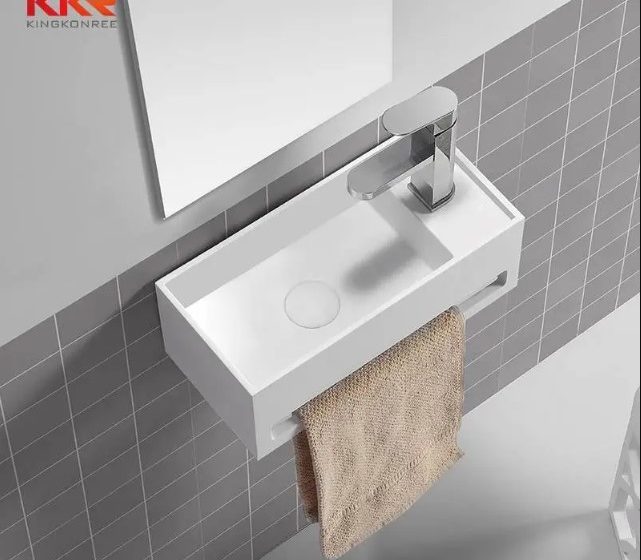

The material of a washbasin affects more than its appearance. It determines how the surface handles daily use, how easily stains come off, how much maintenance it needs, and how long the fixture may last. These details matter even more in compact bathrooms, where a basin gets regular use despite its smaller size. Choosing the right material helps prevent problems such as surface scratches, discoloration, and difficult cleaning.
A small wash basin needs to balance durability with practical dimensions and a finish that suits the bathroom. Solid surface, ceramic, and resin are three materials worth comparing when selecting a compact fixture. Each has different manufacturing properties, design possibilities, maintenance needs, and cost considerations.
1. Solid Surface: Flexible Design With a Smooth Finish
Solid surface is a manufactured material commonly made from mineral fillers combined with acrylic or polyester resins. Manufacturers shape it into bathroom fixtures and other interior surfaces. Its composition allows different colors, forms, and finishes without relying on the traditional appearance of ceramic.
One of its main advantages is design flexibility. Solid surface can form rounded bowls, integrated countertops, and clean geometric shapes. This makes it suitable for bathrooms where the basin needs to fit a specific layout or match a contemporary interior.
Benefits of Solid Surface Basins
Solid surface offers several practical features:
- Smooth appearance: Its consistent finish gives the basin a clean and modern look.
- Design flexibility: Manufacturers can produce different shapes, sizes, and colors.
- Repair options: Some surface scratches can be sanded or repaired, depending on the product.
- Integrated construction: Certain designs combine the basin and countertop into one continuous unit.
- Comfortable surface: The material generally feels warmer to the touch than ceramic.
These properties make solid surface a useful option for homeowners who want more control over the basin’s appearance and dimensions.
Limitations to Consider
Solid surface products vary in composition and quality. Some may scratch more easily than ceramic, especially when users clean them with abrasive pads. Certain products can also show damage from excessive heat or unsuitable chemicals.
The material’s repairability depends on its formulation and thickness. Before purchasing, check the manufacturer’s care instructions and confirm which cleaning products are safe to use.
Where Solid Surface Works Best
Solid surface suits modern residential bathrooms, hotel washrooms, and projects that require a particular shape or color. It can also work well in compact spaces where an integrated basin and countertop help reduce visible joints.
For rental properties or busy shared bathrooms, compare the product’s repair requirements and expected maintenance costs before choosing it.
2. Ceramic: A Familiar Choice for Everyday Bathrooms
Ceramic is one of the most established materials used in bathroom basins. Manufacturers shape a clay-based body, fire it at high temperatures, and apply a glaze that creates a smooth outer surface.
Its familiar appearance and straightforward maintenance make it suitable for many residential and commercial settings. Ceramic basins are available in several shapes, from traditional oval bowls to compact rectangular designs.
Benefits of Ceramic Basins
Ceramic offers a combination of practical and visual advantages.
Resistance to stains: The glazed surface helps prevent ordinary dirt, soap residue, and many bathroom stains from penetrating the material.
Easy cleaning: A soft cloth and a suitable bathroom cleaner are usually enough for routine care.
Color consistency: White ceramic remains a popular option because it works with many tile colors, faucets, and bathroom styles.
Surface hardness: The fired material provides a hard surface that handles normal bathroom use well.
Availability: Ceramic basins come in many standard sizes and installation styles, making it easier to compare options.
These qualities make ceramic a reliable choice for bathrooms that need a familiar fixture without complicated maintenance.
Limitations of Ceramic
Although ceramic resists everyday wear, it can chip or crack after a strong impact. A heavy object falling onto the bowl may damage the glaze or the underlying body.
Repairing visible cracks can also be difficult. In many cases, replacing the basin provides a more reliable solution than attempting a surface repair.
Ceramic also offers less freedom in shape and customization than some solid surface products. Its manufacturing process generally favors established forms and sizes.
Where Ceramic Works Best
Ceramic suits family bathrooms, guest toilets, rental properties, and commercial washrooms where easy cleaning matters. It is particularly practical for buyers who prefer a classic white finish and widely available designs.
3. Resin: Lightweight Construction and Varied Designs
Resin basins use synthetic resin as a key part of their material composition. The exact formulation varies by manufacturer. Some products combine resin with mineral fillers, pigments, or other additives to create different levels of hardness, texture, and finish.
This variation makes it important to check the specific product rather than assuming every resin basin performs in the same way. Resin can support curved shapes, colored finishes, and designs that may be difficult to achieve with traditional ceramic.
Benefits of Resin Basins
Resin offers several features that appeal to bathroom designers and homeowners.
- Design variety: Manufacturers can produce different colors, shapes, and surface effects.
- Lightweight options: Some resin products weigh less than comparable ceramic fixtures.
- Molded forms: The material can support curved edges and distinctive bowl shapes.
- Smooth finishes: Many products have a polished surface that is easy to wipe clean.
- Flexible styling: Resin can suit both contemporary and decorative bathroom interiors.
Its ability to support different forms makes resin worth considering when standard basin designs do not match the project.
Limitations of Resin
The performance of a resin basin depends heavily on its formulation and protective finish. Lower-quality products may scratch, discolor, or lose their original appearance more quickly.
Some resin surfaces also react poorly to strong solvents, abrasive cleaners, or excessive heat. Users need to follow the manufacturer’s maintenance guidance to avoid unnecessary damage.
Buyers should ask about the resin type, surface coating, scratch resistance, and repair options before making a decision.
Where Resin Works Best
Resin can suit residential bathrooms that need a specific color or shape. It may also work in interior projects where visual coordination matters as much as everyday function.
For high-traffic washrooms, compare technical specifications and durability information carefully. Appearance alone does not show how well a resin product will perform over time.
Solid Surface vs Ceramic vs Resin: Key Differences
These three materials serve similar purposes, yet their properties differ. The following comparison gives a general overview. Actual performance depends on product quality, construction, and manufacturer specifications.
| Feature | Solid Surface | Ceramic | Resin |
| Appearance | Smooth and contemporary | Classic and glossy | Available in varied finishes |
| Design flexibility | High | Moderate | High |
| Surface hardness | Varies by formulation | Generally high | Varies by formulation |
| Scratch repair | Possible for some products | Usually difficult | Depends on product type |
| Impact resistance | Varies | Can chip or crack | Varies |
| Cleaning | Usually straightforward | Usually straightforward | Depends on finish |
| Customization | Often extensive | More limited | Often extensive |
| Main concern | Scratches and heat sensitivity | Impact damage | Quality and coating differences |
No single material is best for every bathroom. The right choice depends on how the basin will be used, how much maintenance is acceptable, and what the project budget allows.
What Should You Consider Before Choosing a Material?
A material comparison becomes more useful when connected to the actual bathroom conditions. Before selecting a basin, consider the following factors.
Daily Usage and Traffic
A basin in a family bathroom may receive constant use from several people. A guest toilet may only serve occasional visitors. Commercial washrooms may experience even heavier traffic.
For frequent use, prioritize a durable surface and a design that cleaning staff can maintain easily. Check product specifications rather than relying on general material descriptions.
Cleaning Products and Maintenance
Different materials respond differently to cleaning chemicals. Abrasive powders and rough scrubbing pads may damage certain finishes. Strong solvents can also affect some resin and solid surface products.
Ask the supplier for approved cleaning instructions. A basin that suits the property’s normal cleaning routine is easier to maintain over time.
Bathroom Style and Color Scheme
Material choice also affects the overall interior. White ceramic fits traditional and contemporary bathrooms, while solid surface and resin offer more options for color and shape.
Consider the basin alongside the wall tiles, countertop, faucet, mirror, and lighting. A consistent finish helps the compact fixture feel like part of the room rather than an afterthought.
Installation Requirements
The basin material and design influence the installation process. Ceramic models may require careful handling because of their weight and risk of impact damage. Solid surface and resin products may need specific supports or mounting arrangements depending on their construction.
Check the following before installation:
- Basin weight and wall or countertop support
- Mounting type and fixing points
- Faucet hole position
- Waste outlet dimensions
- Compatibility with existing plumbing
- Manufacturer installation instructions
Planning these details early helps avoid extra work during bathroom renovation.
Purchase Price and Long-Term Value
The initial price does not tell the full story. A less expensive basin may require earlier replacement, while a higher-priced option may offer repair benefits or a longer service life.
Compare the purchase cost with maintenance needs, warranty coverage, replacement availability, and installation expenses. This provides a more realistic view of long-term value.
How to Maintain Each Basin Material
Regular cleaning helps preserve the surface and prevents soap residue, mineral deposits, and dirt from building up.
Caring for Solid Surface
Use a soft cloth with mild soap or a manufacturer-approved cleaner. Avoid abrasive pads unless the manufacturer specifically allows them. Wipe away standing water to reduce mineral marks.
For minor scratches, check the product’s repair instructions before attempting to sand or polish the surface.
Caring for Ceramic
Clean ceramic with a non-abrasive bathroom cleaner and a soft sponge. Remove soap residue and water marks regularly, especially around the faucet and drain.
Avoid dropping heavy objects into the bowl. Inspect the surface occasionally for chips or cracks that may require repair or replacement.
Caring for Resin
Follow the cleaning instructions supplied with the basin. A soft cloth and mild cleaning solution are suitable for many resin products, although specific formulations may have different requirements.
Avoid strong chemicals, rough cleaning tools, and excessive heat unless the manufacturer confirms they are safe.
Common Mistakes When Comparing Basin Materials
Material selection can become confusing when product descriptions focus heavily on appearance. A few common mistakes can lead to poor purchasing decisions.
- Assuming all resin products are alike: Resin formulations differ, so check the actual composition and finish.
- Choosing based only on price: Consider installation, cleaning, repair, and replacement costs.
- Ignoring impact resistance: Ceramic may chip or crack after a strong impact, which matters in busy bathrooms.
- Overlooking repair options: Some solid surface products allow minor repairs, while other materials may require replacement.
- Using unsuitable cleaners: Harsh products can damage finishes and shorten the basin’s useful life.
- Forgetting installation support: The basin needs suitable mounting and plumbing arrangements regardless of its material.
A careful comparison helps prevent these problems and makes it easier to choose a fixture that suits the bathroom’s actual needs.
Final Thoughts
Solid surface, ceramic, and resin each offer different advantages for compact bathroom basins. Solid surface provides design flexibility and repair options for certain products. Ceramic offers a familiar, easy-to-clean finish with good everyday durability. Resin supports varied shapes and colors, although its performance depends on the formulation and protective coating.
The best material is the one that matches the bathroom’s usage, maintenance routine, installation conditions, and budget. By comparing these factors alongside the basin’s dimensions and design, homeowners can select a fixture that remains practical and attractive over time.