
Outdoor equipment often has to withstand conditions that ordinary household products rarely encounter. Camping trips, fishing outings, road travel, and extended outdoor events can involve rough surfaces, repeated handling, changing weather, and limited access to storage facilities. A cooler used in these environments needs more than enough room for drinks and food. Its construction should be suitable for regular movement and the demands of outdoor use. This is one reason rotomolded designs attract attention among people looking for a sturdy cooling solution.
A Rotomolded Cooler is manufactured using a rotational molding process that forms a largely continuous plastic shell. This construction can produce a robust body with fewer joined sections than some conventional designs. Combined with suitable insulation and a well-fitted lid, it can provide a practical option for outdoor cooling. However, durability and cooling performance still depend on the specific model, materials, design, and care.
1. Understanding the Rotomolding Process
Rotational molding involves placing plastic material inside a mold, which is heated and rotated so that the material spreads across the interior surface. As it cools, it forms the finished hollow structure.
For cooler manufacturing, this process can create a strong outer body with relatively consistent walls. Because the shell is formed as one main structure, there may be fewer seams than in products assembled from multiple molded pieces.
The final result depends on the manufacturer’s process, material quality, wall design, and quality-control standards. Rotomolding is a manufacturing method, not an automatic guarantee that every cooler will have the same level of strength.
2. A Sturdy Shell for Outdoor Handling
Coolers used outdoors may be lifted into vehicles, carried across campsites, placed on uneven ground, or moved repeatedly during an event. A robust shell can help the container withstand ordinary knocks and handling.
This is particularly useful for people who use the same cooler regularly across different activities. A durable outer structure can also help protect the insulated space and the contents from routine physical contact.
Users should still avoid dropping or misusing the cooler. Handles, hinges, lids, and other attached components can remain vulnerable even when the main shell is strong.
3. Insulation Supports Cooling Performance
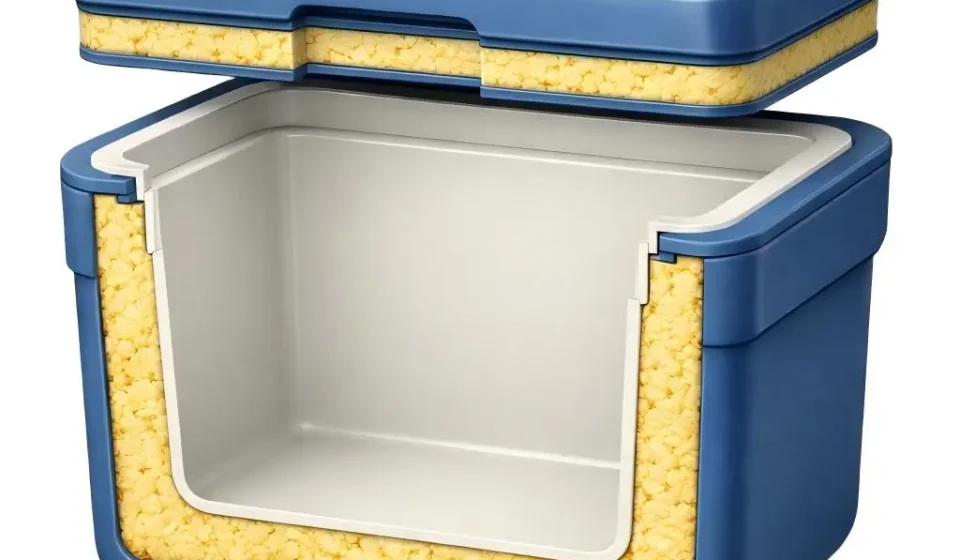
Rotomolded coolers are often designed with insulated walls that help slow heat transfer. The insulation works together with the lid and closure system to reduce the rate at which warmth enters the interior.
Actual cooling performance depends on more than the manufacturing method. Insulation thickness, material properties, lid fit, ambient temperature, ice quantity, and opening frequency all make a difference.
Before buying, compare available performance information and consider how long the cooler will typically be used between access points. Pre-chilling contents and keeping the lid closed can support better practical results.
4. Useful for Demanding Outdoor Activities
A durable cooler can be useful across a range of outdoor settings. Campers may use it to organize chilled ingredients and drinks, anglers may want a sturdy container for outdoor trips, and families may bring one on longer drives or group outings.
The ideal size depends on the activity. A very large cooler may suit a group campsite but become inconvenient for a short walk to a picnic area. A smaller model may be easier to transport but provide insufficient capacity for several days away.
Consider the terrain, distance from the vehicle, and weight of a fully loaded cooler before selecting a model.
5. Design Details Affect Everyday Use
A durable shell is only one part of a practical cooler. Users should also examine the lid, hinges, handles, latches, drainage features, and base.
A secure lid helps keep the contents enclosed, while comfortable handles make lifting easier. Some designs include tie-down points or other features that can help secure the cooler during vehicle travel.
The interior should be straightforward to clean and dry. A cooler that is difficult to maintain may become inconvenient when used frequently for food and beverages.
6. Compare the Long-Term Value
Rotomolded coolers may have a higher initial purchase price than simpler alternatives. Whether that extra cost is worthwhile depends on how often the cooler will be used and the conditions it must handle.
For frequent outdoor users, a sturdy design may offer value through repeated use. Occasional users, however, may find that a lighter or less expensive model meets their requirements.
Compare warranty terms, construction details, replacement parts, weight, and available features. The strongest-looking product is not necessarily the most convenient choice for every trip.
7. Maintenance Helps Preserve Durability
After each outing, empty the cooler and clean it according to the manufacturer’s instructions. Allow the interior to dry before closing it for storage. Inspect hinges, handles, latches, and the lid for damage.
Avoid using unsuitable cleaning chemicals or abrasive tools that could damage surfaces. Store the cooler in a location where it will not be exposed to unnecessary impact or extreme conditions outside the manufacturer’s recommendations.
Conclusion
Rotomolded coolers are valued for their sturdy molded construction and suitability for repeated outdoor use. Their practical performance also depends on insulation, lid design, hardware, capacity, and maintenance. By comparing the complete design against the demands of camping, fishing, travel, or everyday recreation, buyers can choose a cooler that offers an appropriate balance of durability and convenience.