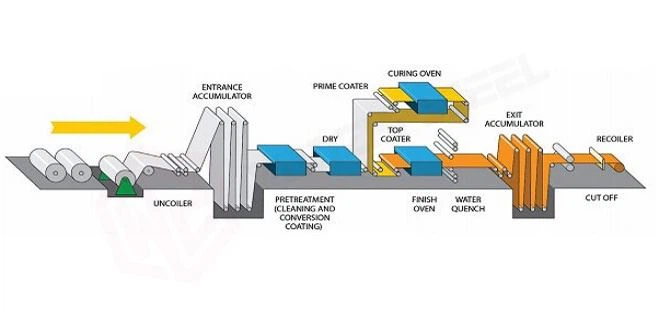

Industrial metal processing environments demand strict safety management due to the combination of high temperatures, chemical usage, and large-scale mechanical equipment. A color coating line is a complex production system where multiple hazards must be carefully controlled to protect workers, maintain equipment integrity, and ensure stable production output. Safety standards are therefore a fundamental part of designing and operating these facilities.
A modern color coating line integrates automated controls, protective systems, and monitoring technologies that help reduce risks associated with chemical handling, thermal processing, and continuous mechanical operation. These safety measures are essential for maintaining both operational efficiency and workplace protection.
Table of Contents
ToggleImportance of Safety in Color Coating Facilities
Safety in coating facilities is not only a regulatory requirement but also a key factor in production reliability. Unsafe working conditions can lead to equipment failure, production downtime, and serious hazards for operators.
Key objectives of safety standards include:
- Protecting workers from industrial hazards
- Preventing equipment damage and failures
- Ensuring stable and uninterrupted production
- Reducing operational risks and accidents
A well-implemented safety system improves both productivity and long-term operational stability.
Mechanical Safety Measures
A color coating line includes high-speed rollers, conveyors, and tension systems that require strict mechanical safety control. Without proper safeguards, these moving parts can pose significant risks.
Common mechanical safety features include:
- Emergency stop systems placed along the line
- Protective guards around rotating equipment
- Automatic shutdown mechanisms in case of overload
- Interlocking systems to prevent unsafe machine operation
Regular inspection of mechanical components also helps prevent unexpected failures.
Thermal Safety in High-Temperature Zones
Curing ovens and drying systems operate at extremely high temperatures, making thermal safety a critical concern. Proper insulation and temperature control are essential to prevent accidents and energy losses.
Key thermal safety practices include:
- Heat-resistant insulation materials
- Multi-zone temperature monitoring systems
- Overheat protection alarms and shutdown functions
- Controlled cooling sections to avoid thermal shock
Maintaining stable temperature control ensures both product quality and operator safety.
Chemical Handling and Environmental Safety
Pre-treatment and coating processes involve chemicals such as cleaning agents, conversion coatings, and paint materials. Safe handling of these substances is essential to avoid health risks and environmental damage.
Safety measures include:
- Proper storage of chemical materials in controlled environments
- Automated chemical dosing systems to reduce manual exposure
- Ventilation systems to remove fumes and vapors
- Use of protective equipment for operators
These practices reduce exposure risks and ensure compliance with environmental standards.
Electrical Safety and Control Systems
Modern color coating facilities rely heavily on electrical systems and automation. Electrical safety is crucial to prevent short circuits, overloads, and system failures.
Important safety features include:
- Grounding and insulation of electrical systems
- Circuit breakers and overload protection devices
- Regular inspection of wiring and control panels
- Emergency power shutdown systems
Proper electrical design ensures safe and stable operation of the entire line.
Automation and Safety Integration
Automation plays a major role in improving safety standards in a color coating line. Intelligent systems can detect abnormal conditions and respond quickly to prevent accidents.
Key automated safety functions include:
- Real-time fault detection and alarms
- Automatic line shutdown during critical failures
- Sensor-based monitoring of temperature and pressure
- Predictive maintenance alerts to prevent breakdowns
These systems reduce reliance on manual intervention and improve overall safety performance.
Operator Training and Safety Awareness
Even with advanced automation, human operators remain essential to system performance. Proper training ensures that workers understand equipment operation and safety procedures.
Effective training programs include:
- Emergency response procedures
- Safe handling of chemicals and materials
- Equipment operation guidelines
- Hazard identification and reporting
Well-trained personnel significantly reduce the risk of accidents.
Fire Prevention and Emergency Systems
Due to the presence of flammable coatings and high-temperature equipment, fire safety is a critical aspect of industrial coating facilities.
Key fire safety systems include:
- Fire detection and alarm systems
- Automatic sprinkler or suppression systems
- Fire-resistant materials in critical areas
- Clearly marked evacuation routes
Regular drills and inspections ensure readiness in case of emergencies.
Maintenance as a Safety Requirement
Routine maintenance is not only important for performance but also for safety assurance. Poorly maintained equipment increases the risk of breakdowns and accidents.
Essential maintenance practices include:
- Regular inspection of mechanical and electrical systems
- Cleaning of ventilation and exhaust systems
- Calibration of sensors and control devices
- Replacement of worn or damaged components
Preventive maintenance helps avoid unexpected safety incidents.
Conclusion
Safety standards in a color coating line facility are essential for protecting workers, ensuring equipment reliability, and maintaining continuous production. By combining mechanical safeguards, thermal protection, chemical handling procedures, and advanced automation systems, manufacturers can create a safe and efficient working environment.
As industrial processes become more advanced, safety systems continue to evolve, offering greater automation, real-time monitoring, and predictive protection. A strong safety framework not only reduces risks but also supports long-term productivity and operational success in metal coating industries.