
Foundation systems play a critical role in the safety, stability, and durability of construction projects. Whether building bridges, commercial facilities, retaining walls, ports, or industrial structures, selecting the right piling materials is essential for supporting loads and managing challenging ground conditions. The quality of these materials can influence installation efficiency, structural performance, and long-term maintenance requirements.
Choosing a dependable Pile Manufacturer is an important step in ensuring that foundation materials meet project specifications and applicable quality standards. A reliable manufacturer should offer consistent product quality, accurate technical information, suitable production capabilities, and dependable delivery services. Understanding what to evaluate before making a purchasing decision helps contractors, engineers, and procurement teams reduce risks and select materials that support successful construction outcomes.
Understand Your Project’s Piling Requirements
Before comparing manufacturers, identify the specific requirements of your construction project. Different soil conditions, structural loads, and installation methods require different types of piling products.
Start by reviewing the project’s geotechnical investigation and structural design documents. These provide essential information about soil composition, groundwater conditions, foundation depth, and expected loads.
Consider the following factors:
- Soil conditions: Soil strength, density, and groundwater levels influence pile selection and installation methods.
- Load requirements: The foundation must support the expected vertical, lateral, and uplift forces.
- Installation method: Driven piles, bored piles, and sheet piles require different product characteristics.
- Project environment: Marine, industrial, and underground applications may require additional corrosion protection.
- Design standards: Materials should comply with the technical specifications and regulations applicable to the project.
A clear understanding of these requirements makes it easier to determine whether a manufacturer’s products are suitable.
Evaluate Product Range and Manufacturing Capabilities
A reliable manufacturer should have the production capabilities to supply products that match the technical requirements of different construction applications.
1. Types of Piling Products
Check whether the manufacturer offers the specific products required for your project. Common piling products include:
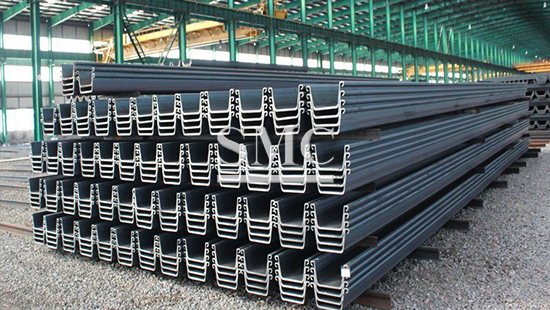
- Steel sheet piles: Interlocking steel sections used for retaining walls, cofferdams, and excavation support.
- H-piles: Structural steel sections commonly used in deep foundation systems.
- Pipe piles: Hollow steel sections used to transfer structural loads into deeper soil layers.
- U-shaped sheet piles: Sections designed for retaining structures and temporary or permanent earth support.
- Z-shaped sheet piles: Interlocking profiles often selected for applications requiring efficient bending resistance.
A broad product range can simplify procurement, particularly when a project requires several types of piling materials.
2. Production Capacity
Large construction projects often require substantial quantities of materials within strict schedules.
Ask about production capacity, available stock, manufacturing lead times, and the ability to handle repeat orders. A manufacturer with suitable facilities and production planning can help reduce the risk of material shortages.
3. Customization Options
Some projects require non-standard dimensions, specific steel grades, or customized lengths.
Confirm whether the manufacturer can accommodate these requirements while maintaining dimensional accuracy and product quality.
Check Material Quality and Applicable Standards
Material quality is one of the most important factors when selecting a piling supplier. Products must have the required mechanical properties and dimensional characteristics to perform as intended.
Steel Grade and Mechanical Properties
For steel piling products, review the specified steel grade, yield strength, tensile strength, and chemical composition.
These properties influence the material’s ability to withstand structural loads, fabrication processes, and environmental conditions.
Dimensional Accuracy
Check that the supplied piles meet the specified dimensions, thicknesses, lengths, and tolerances.
For sheet piles, interlock compatibility is especially important because poorly matched sections can create installation difficulties and affect wall performance.
Quality Certifications
Ask manufacturers to provide relevant quality documentation, which may include:
- Material test certificates.
- Chemical composition reports.
- Mechanical test results.
- Dimensional inspection records.
- Product conformity documentation.
- Quality management certifications, where applicable.
Documentation should correspond to the actual materials supplied rather than being treated as a general company credential.
Assess Manufacturing Quality Control
A manufacturer’s quality control system helps maintain consistency across production batches.
Reliable producers should have established inspection procedures covering raw materials, manufacturing operations, finished products, and packaging.
Important quality control practices include:
Raw Material Inspection: Incoming steel should be checked against purchasing specifications and material requirements.
Production Monitoring: Manufacturing processes should be monitored to identify dimensional or processing inconsistencies.
Finished Product Testing: Products should undergo appropriate inspections and testing before shipment.
Traceability: Material identification and batch records help connect supplied products with their relevant test documentation.
Nonconformance Management: Manufacturers should have procedures for identifying, documenting, and correcting products that do not meet specifications.
These practices provide greater confidence that the delivered materials will match the approved project requirements.
Review Industry Experience and Reputation
Experience can indicate whether a manufacturer understands the technical and logistical challenges associated with construction projects.
Look for evidence of previous work involving applications similar to yours. A supplier with experience in infrastructure, marine construction, industrial foundations, or retaining systems may be better prepared to address specialized requirements.
When assessing reputation, consider:
- Years of relevant manufacturing experience.
- Examples of completed projects.
- References from contractors or construction companies.
- Consistency of product quality.
- Customer feedback and communication.
- Ability to resolve technical or delivery issues.
Rather than relying only on marketing claims, request verifiable information about previous projects and product performance.
Compare Pricing Without Compromising Quality
Price is an important purchasing consideration, but the lowest quotation does not always represent the best overall value.
Different manufacturers may quote different specifications, steel grades, product tolerances, or delivery conditions. Comparing prices without checking these details can lead to inaccurate purchasing decisions.
Request quotations that clearly identify:
- Product type and section designation.
- Steel grade and applicable standards.
- Dimensions, thickness, and length.
- Quantity and unit weight.
- Surface treatment or coating requirements.
- Packaging and transportation costs.
- Production and delivery schedules.
- Payment terms and quotation validity.
Also consider the potential cost of poor-quality materials, installation delays, rework, and replacement. A slightly higher initial price may be justified when it includes better documentation, reliable production, and consistent product quality.
Examine Delivery and Supply Chain Reliability
Construction schedules depend on materials arriving at the correct location and time.
Before selecting a manufacturer, evaluate its logistics capabilities and ability to coordinate deliveries according to project requirements.
Important questions include:
- Can the manufacturer meet the required delivery schedule?
- Does it have sufficient production capacity or available inventory?
- Can it arrange transportation for the required product lengths and quantities?
- Are products protected against damage during storage and shipment?
- Can the supplier provide updates about production and dispatch?
- Does it have a process for handling delayed or incomplete deliveries?
For international projects, also clarify export documentation, customs requirements, shipping arrangements, and responsibility for transportation costs.
Reliable communication throughout the supply process can help prevent misunderstandings and reduce construction delays.
Evaluate Technical Support and Customer Service
A dependable manufacturer should be able to provide accurate technical information before and after an order is placed.
Technical support is particularly useful when selecting pile sections, reviewing product specifications, or coordinating material requirements with engineering and installation teams.
Look for manufacturers that can provide:
- Product catalogs and dimensional tables.
- Material specifications and test certificates.
- Guidance on product selection and available options.
- Information about fabrication and handling.
- Clear responses to technical questions.
- Support with order documentation and delivery coordination.
Manufacturers should provide product information without replacing the work of qualified structural and geotechnical engineers. Final pile selection and foundation design must be based on project-specific engineering calculations.
Common Mistakes to Avoid When Choosing a Pile Manufacturer
Even experienced procurement teams can overlook important details when evaluating suppliers.
Avoid these common mistakes:
Selecting Based on Price Alone: Low quotations may exclude essential specifications, testing, or delivery services.
Ignoring Material Certifications: Without suitable documentation, it can be difficult to verify whether products meet project requirements.
Overlooking Production Capacity: A manufacturer may offer competitive prices but lack the capacity to fulfill a large order on schedule.
Failing to Confirm Dimensions: Incorrect lengths, thicknesses, or section profiles can create installation and design problems.
Neglecting Delivery Planning: Transportation restrictions and long lead times can affect project schedules.
Accepting Unverified Claims: Product quality, manufacturing capabilities, and certifications should be supported by relevant evidence.
Careful supplier evaluation helps prevent these issues before materials reach the construction site.
Checklist for Selecting a Reliable Pile Manufacturer
A structured evaluation process makes supplier comparisons easier and more consistent.
| Evaluation Area | What to Verify | Product range | Availability of required pile types and profiles | Material quality | Steel grade and mechanical properties | Manufacturing | Production capacity and dimensional control | Certifications | Relevant quality and product documentation | Testing | Material and finished-product inspection records | Experience | Similar projects and verifiable references | Pricing | Complete and clearly defined quotations | Delivery | Lead times, shipping, and packaging arrangements | Technical support | Access to specifications and knowledgeable assistance | Communication | Responsiveness and order updates |
|---|
Using this checklist can help procurement teams compare manufacturers based on measurable requirements instead of relying on price or promotional claims alone.
Conclusion
Choosing a reliable pile manufacturer requires careful consideration of product quality, manufacturing capabilities, technical documentation, industry experience, pricing, and delivery performance. Each factor contributes to the overall reliability of the foundation materials used in a construction project.
Before placing an order, confirm that the manufacturer can supply the required pile types, meet applicable standards, provide traceable quality records, and deliver materials within the project schedule. Comparing suppliers through a consistent evaluation process helps reduce procurement risks and supports better construction planning.
By prioritizing verified quality and dependable service, contractors and engineers can make informed sourcing decisions and obtain piling materials suited to their project’s structural and operational requirements.