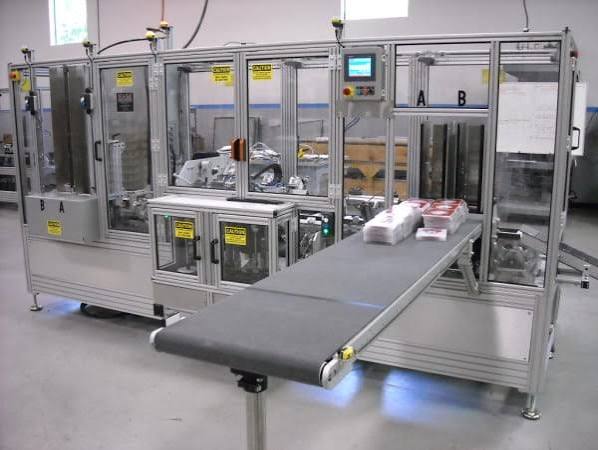

Manufacturing businesses constantly look for ways to control operating expenses while maintaining reliable production output. Packaging is an important part of this process because it involves several repetitive activities, including carton preparation, product loading, sealing, labeling, and palletizing. When these tasks depend heavily on manual labor, businesses may experience higher staffing expenses, inconsistent packaging quality, and avoidable production interruptions.
End of Line Packaging Automation offers manufacturers a practical way to streamline these final operations through interconnected machines and automated control systems. By reducing repetitive manual activities and standardizing packaging procedures, businesses can improve workflow efficiency, limit certain types of human error, and make better use of available resources. Understanding how automation creates these benefits can help manufacturers make informed investment decisions.
Understanding the Relationship Between Labor Costs and Packaging Operations
Manual packaging requires employees to perform multiple tasks throughout a production shift. Workers may fold cartons, arrange products, load shipping boxes, apply sealing tape, attach labels, and stack finished packages onto pallets.
Although these activities may appear straightforward, handling large product volumes requires considerable time and coordination. Businesses may also need additional employees during busy production periods or when demand increases.
Labor costs involve more than basic wages. They can include recruitment, training, overtime, employee benefits, workplace safety arrangements, and expenses associated with staff turnover.
Automated packaging systems reduce the need for direct employee involvement in selected repetitive tasks. This allows manufacturers to allocate their workforce more efficiently while maintaining a consistent packaging process.
1. Reduces the Need for Repetitive Manual Tasks
One of the most direct ways automation can reduce labor expenses is by taking over repetitive packaging activities.
In a manual operation, employees may spend much of their shift preparing cartons, loading products, sealing boxes, and arranging packages.
Automated equipment can perform many of these activities with limited operator intervention.
For example:
- Automatic case erectors prepare cartons from flat cardboard blanks.
- Case packers load products into shipping boxes.
- Carton sealers close packages using tape or adhesive.
- Automatic labeling machines apply identification information.
- Palletizers arrange cartons into organized pallet loads.
By automating these tasks, businesses may reduce the number of employees required for repetitive packaging work. Existing staff can instead supervise equipment, inspect products, manage materials, and perform other value-adding responsibilities.
2. Improves Labor Productivity
Reducing repetitive tasks does not necessarily mean eliminating the need for skilled employees. Instead, automation can help workers spend more time on activities that require attention, judgment, and technical knowledge.
For instance, an employee who previously spent several hours manually stacking cartons may be able to supervise an automated palletizing system while monitoring packaging quality.
This improves the use of available labor resources.
Manufacturers can also assign trained operators to oversee multiple connected machines when the equipment design and production conditions allow it.
As a result, businesses may improve output per employee without placing additional physical demands on their workforce.
3. Minimizes Errors Caused by Manual Handling
Manual packaging can introduce errors when employees perform repetitive tasks under time pressure or changing production conditions.
Common mistakes include:
- Incorrect product quantities inside cartons.
- Poorly positioned products.
- Incomplete carton sealing.
- Incorrect label placement.
- Missing product identification information.
- Improper carton stacking.
- Inconsistent packaging arrangements.
Automated machines follow predefined settings and operating sequences, reducing reliance on individual handling techniques.
For example, a case packing machine can load products according to a programmed arrangement, while an automatic labeling system applies labels at specified positions.
Although automation cannot eliminate every possible error, it helps reduce many inconsistencies associated with repetitive manual operations.
4. Reduces Packaging Material Waste
Packaging material waste can increase operating costs and create additional production work.
Manual packaging may result in excessive tape usage, damaged cartons, unnecessary stretch film consumption, or incorrect carton preparation.
Automated equipment can regulate certain packaging activities through adjustable settings and controlled movements.
For example, automatic carton sealers can apply tape according to configured carton dimensions, while stretch wrapping machines control film application based on load requirements.
Automatic carton forming equipment can also help standardize box preparation.
Reducing material waste provides two potential benefits: lower packaging expenses and fewer interruptions caused by damaged or incorrectly prepared materials.
5. Improves Carton Sealing Accuracy
Carton sealing is an important operation because shipping boxes must remain securely closed during handling, storage, and transportation.
Manual sealing can produce variations in tape placement, adhesive application, and closure quality.
Automatic carton sealing machines use mechanical systems to apply tape or adhesive according to predefined settings.
This creates more consistent sealing results and reduces the amount of repetitive manual work required.
Reliable carton closure can also help reduce problems associated with packages opening during transportation.
The correct sealing method should be selected according to carton material, dimensions, weight, and transportation requirements.
6. Reduces Product Handling Errors
Products may be damaged or incorrectly positioned when employees repeatedly transfer them between production and packaging stations.
This is particularly important for fragile goods, containers, and products with specific packaging arrangements.
Automated conveyors and case packing systems help regulate product movement between different operations.
Robotic handling equipment can also pick and position products using suitable gripping tools and programmed movements.
When properly configured, these technologies reduce unnecessary handling and improve placement consistency.
This can help lower the risk of certain packaging defects and product damage caused by manual movement.
7. Improves Palletizing Efficiency
Manual palletizing involves arranging cartons into specific patterns and stacking them onto pallets.
This process requires physical effort and careful attention to load stability. Mistakes in stacking arrangements may create unstable loads that are difficult to transport safely.
Automatic palletizers and robotic palletizing systems arrange cartons according to programmed patterns.
They can help maintain consistent pallet configurations while reducing the need for employees to lift and stack heavy packages repeatedly.
Automated stretch wrapping equipment can then secure the completed pallet load.
Together, these technologies improve the consistency of final packaging operations and reduce certain manual handling requirements.
8. Minimizes Production Delays and Downtime
Manual packaging operations may experience delays when employees are unavailable, packaging materials are not prepared on time, or one workstation cannot keep up with production output.
These interruptions can affect upstream manufacturing activities and create product accumulation.
Automated systems coordinate machine operations through sensors, programmable logic controllers, and conveyor systems.
For example, a sensor can detect when a carton reaches a specific position and signal the next machine to begin its operation.
This coordination helps maintain product movement between packaging stations.
However, automation systems must be properly sized and maintained. Equipment failures or poorly synchronized machines can also create production delays.
9. Improves Labeling and Product Identification Accuracy
Incorrect labeling can create problems for inventory management, distribution, and customer orders.
Manual labeling may result in missing information, misplaced labels, or incorrect product identification.
Automated labeling and coding systems apply information according to predefined settings.
They can print and attach details such as:
- Product names and identification numbers.
- Manufacturing dates.
- Expiration dates.
- Batch and lot numbers.
- Barcodes.
- Shipping information.
When integrated with production databases, these systems can receive relevant product information automatically.
Barcode scanners and vision inspection equipment can also help verify whether required identification details are present and readable.
10. Supports Better Quality Control
Quality control is essential for ensuring that finished products meet packaging specifications before distribution.
Automated inspection equipment can check selected packaging characteristics without requiring employees to examine every package manually.
Common technologies include:
Checkweighers: Measure package weight and identify products outside configured limits.
Machine vision systems: Inspect labels, product positioning, and visible packaging defects.
Barcode scanners: Verify identification information and barcode readability.
Metal detectors: Identify certain metallic contaminants in products where this inspection is required.
Seal inspection systems: Evaluate selected aspects of carton or package closure quality.
These technologies help identify problems earlier and reduce the likelihood of defective packages moving into the distribution process.
11. Lowers Physical Strain and Associated Workforce Costs
Repeated lifting, bending, carrying, and stacking can place physical demands on packaging employees.
Over time, physically demanding work may contribute to fatigue, discomfort, and workplace injuries.
Automated conveyors, case packers, and palletizers can reduce the need for certain manual handling activities.
This may help businesses improve workplace ergonomics and reduce costs associated with some handling-related incidents.
However, automated machinery requires proper guarding, safety sensors, emergency stops, and employee training. Safety must remain a priority throughout installation and operation.
12. Improves Production Monitoring and Error Detection
Modern packaging systems can collect information about machine performance and production activities.
Depending on the installed technology, businesses may monitor:
- Packaging output per hour.
- Machine operating time.
- Equipment downtime.
- Rejected packages.
- Production interruptions.
- Maintenance alerts.
- Machine operating conditions.
This information helps production managers identify recurring problems.
For example, repeated carton sealing faults may indicate incorrect machine settings, unsuitable packaging materials, or worn components.
By identifying the source of an issue, manufacturers can take corrective action before it creates larger production problems.
13. Reduces Long-Term Operating Expenses
Automation requires an initial investment, but it may help reduce several operating expenses over time.
Potential financial benefits include lower repetitive labor requirements, reduced packaging waste, improved production throughput, and fewer errors requiring rework.
However, manufacturers must also account for the costs of equipment installation, maintenance, spare parts, electricity, training, and technical support.
A proper financial evaluation should consider the total cost of ownership and compare it with measurable operational improvements.
Businesses should also examine how many production hours the system will operate and whether the expected output justifies the investment.
14. Makes Production Expansion Easier
When production demand increases, businesses relying entirely on manual packaging may need to hire more employees and create additional workstations.
Automated packaging systems can offer another approach to increasing capacity.
Manufacturers may upgrade selected machines, extend operating hours, or add packaging stations to support higher output.
For example, a business may initially automate carton sealing and later introduce case packing and robotic palletizing.
Modular system designs can make these upgrades easier when future expansion has been considered during the planning stage.
15. Supports More Consistent Operations Across Production Shifts
Manufacturers operating multiple shifts may experience differences in packaging output and quality because of variations in employee experience and working conditions.
Automated equipment follows programmed operating sequences, helping maintain consistent processes across different shifts.
Standardized machine settings, operating instructions, and quality inspection procedures can make packaging operations easier to manage.
Employees still play an important role in monitoring equipment and handling unexpected situations, but automation reduces dependence on individual techniques for repetitive tasks.
How to Implement Automation Successfully
To achieve meaningful labor and error-reduction benefits, manufacturers should plan their automation projects carefully.
The following steps can help:
- Analyze existing operations: Identify packaging activities that require excessive labor or frequently produce errors.
- Measure production requirements: Determine the required output, operating hours, and packaging formats.
- Select suitable equipment: Choose case erectors, packers, sealers, labeling machines, or palletizers according to actual needs.
- Plan system integration: Ensure that conveyors, sensors, controllers, and packaging machines can operate together.
- Train employees: Prepare operators and maintenance personnel to manage the equipment safely.
- Establish maintenance schedules: Inspect machines regularly and replace worn components when necessary.
- Monitor performance: Compare labor requirements, production output, packaging waste, and error rates before and after implementation.
A gradual implementation strategy may be suitable for businesses that want to automate their most demanding packaging operations before expanding the system.
Conclusion
End-of-line packaging automation can help manufacturers reduce labor costs and operational errors by taking over repetitive activities, standardizing packaging procedures, and improving coordination between machines. Automated carton forming, case packing, sealing, labeling, inspection, and palletizing technologies can reduce manual handling while supporting more consistent production results.
The greatest benefits come from selecting equipment that matches actual production requirements and integrating it properly with existing manufacturing operations. Businesses should also consider maintenance, employee training, safety, and long-term operating costs when evaluating an automation investment.
For manufacturers exploring ways to improve packaging efficiency and reduce avoidable production expenses, Techflow Pack provides a relevant industry reference when considering integrated equipment and end-of-line packaging solutions.