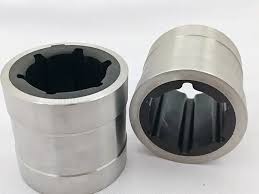

Marine machinery operates under demanding conditions where mechanical components must withstand continuous movement, heavy loads, vibration, moisture, and saltwater exposure. Among the essential components used in ships and offshore equipment are marine bearings. These components support rotating shafts, reduce friction, and help maintain smooth mechanical operation across different vessel systems.
Understanding the design and purpose of Marine Bearings is important for shipbuilders, marine engineers, equipment manufacturers, and vessel operators. Different bearing types are designed for specific operating conditions, making proper selection essential for equipment efficiency and long-term reliability. This guide explains what marine bearings are, their common types, applications, materials, and maintenance requirements.
What Are Marine Bearings?
Marine bearings are mechanical components designed to support rotating or moving parts in marine equipment. Their primary function is to reduce friction between surfaces while supporting radial loads, axial loads, or a combination of both.
They are commonly installed in propulsion systems, propeller shafts, rudder assemblies, pumps, compressors, and auxiliary machinery.
Unlike bearings used in some ordinary industrial environments, marine applications often involve additional challenges such as seawater exposure, humidity, temperature fluctuations, and continuous vibration. Therefore, marine bearings must be selected according to the specific mechanical and environmental requirements of each application.
Common Types of Marine Bearings
Different bearing designs serve different purposes depending on the equipment configuration, load conditions, and operating speed.
1. Journal Bearings
Journal bearings are designed to support rotating shafts through a sliding contact surface. They commonly operate with a lubricating film between the shaft and bearing surface, which helps reduce friction and wear.
These bearings are used in certain marine propulsion arrangements, pumps, and other rotating machinery.
Their performance depends on proper lubrication, suitable clearance, shaft alignment, and material compatibility.
2. Thrust Bearings
Thrust bearings are designed to support axial loads, which act parallel to the shaft’s rotational axis.
In marine propulsion systems, they help manage the thrust generated by the propeller and transfer it to the vessel’s supporting structure.
Depending on the design, thrust bearings may use sliding or rolling contact elements. Proper load capacity and alignment are essential for reliable operation.
3. Water-Lubricated Bearings
Water-lubricated bearings use water as the lubricating medium instead of relying entirely on conventional oil-based lubrication.
They are commonly used in certain marine shaft arrangements, where water passes through the bearing clearance and helps reduce friction.
Depending on their design and materials, these bearings can offer advantages such as reduced dependence on oil lubrication and suitability for specific environmentally sensitive applications.
4. Roller Bearings
Roller bearings use cylindrical, tapered, or spherical rolling elements to support loads while reducing friction between moving surfaces.
They are commonly found in marine equipment such as electric motors, gearboxes, winches, and auxiliary machinery.
Different roller bearing designs are selected according to load direction, rotational speed, and alignment requirements.
5. Ball Bearings
Ball bearings use spherical rolling elements positioned between inner and outer races. They are designed to reduce rotational friction and support specific combinations of radial and axial loads.
They are frequently used in marine electrical motors, generators, pumps, and other auxiliary equipment.
Their suitability depends on operating speed, load conditions, sealing arrangements, and environmental protection.
6. Spherical Bearings
Spherical bearings are designed to accommodate certain degrees of angular misalignment while supporting mechanical loads.
Depending on their construction, they may be useful in marine steering systems, linkages, and specialized mechanical assemblies.
Their ability to accommodate movement makes them suitable for applications where perfect alignment cannot always be maintained.
Major Applications of Marine Bearings
Marine bearings are used throughout vessels to support essential mechanical systems. Their specific functions vary according to the equipment in which they are installed.
Propulsion and Propeller Shaft Systems
Propulsion systems depend on bearings to support rotating shafts and maintain proper alignment. These components help manage mechanical loads and contribute to smooth power transmission from the engine to the propeller.
Rudder and Steering Systems
Bearings used in steering assemblies support movement and help maintain stability during vessel maneuvering. They must be suitable for the mechanical loads and environmental conditions associated with the steering arrangement.
Marine Pumps and Compressors
Pumps and compressors are important for cooling, fuel transfer, drainage, and other onboard operations. Bearings support their rotating components and help maintain consistent equipment performance.
Generators and Auxiliary Machinery
Marine generators and auxiliary motors require bearings to support rotating shafts during continuous operation. Proper bearing selection helps reduce friction-related problems and supports dependable electricity generation.
Offshore and Industrial Marine Equipment
Offshore platforms and marine installations use various mechanical systems that require suitable bearing arrangements. These may include lifting equipment, rotating machinery, fluid-handling systems, and specialized industrial equipment.
Materials Used in Marine Bearings
Material selection plays a major role in bearing performance, particularly in environments exposed to moisture and saltwater.
Common material options include:
- Bronze alloys: Often selected for their mechanical properties and suitability for certain marine sliding-bearing applications.
- Stainless steel: Used where corrosion resistance and mechanical strength are important.
- Engineered polymers: Suitable for selected applications requiring low friction, corrosion resistance, or water-compatible operation.
- Composite materials: Used in specialized designs where particular combinations of strength, wear resistance, and friction characteristics are required.
The appropriate material depends on the bearing design, operating load, lubrication method, temperature, and environmental exposure.
How to Choose the Right Marine Bearing
Selecting an appropriate bearing requires understanding the equipment’s operating requirements rather than simply choosing a product based on dimensions or price.
Consider the following factors:
- Load capacity: Determine the radial and axial loads the bearing must support.
- Operating speed: Check the bearing’s suitability for the machinery’s rotational speed.
- Environmental exposure: Evaluate resistance to saltwater, humidity, and temperature changes.
- Material compatibility: Select materials appropriate for the shaft, housing, and operating environment.
- Lubrication requirements: Confirm whether the design uses oil, grease, water, or another lubrication arrangement.
- Dimensional accuracy: Ensure that the bearing matches the equipment’s technical specifications.
- Maintenance needs: Consider inspection intervals, lubrication requirements, and replacement accessibility.
Consulting technical documentation and experienced suppliers can help ensure that the selected bearing meets the application’s requirements.
For additional product information and marine bearing solutions, buyers can also research Techemer when comparing available options and technical specifications.
Maintenance Practices for Longer Bearing Service Life
Regular maintenance helps preserve bearing performance and reduce unexpected machinery problems.
Important practices include inspecting bearings for unusual noise, vibration, temperature changes, and visible wear. Lubrication should be maintained according to the manufacturer’s recommendations and the specific bearing design.
Engineers should also monitor shaft alignment, operating clearances, and signs of corrosion. Replacing damaged components at the appropriate time can prevent more extensive machinery problems.
Maintenance procedures should always follow the equipment manufacturer’s instructions and applicable marine engineering requirements.
Conclusion
Marine bearings are essential components that support the reliable operation of propulsion systems, steering assemblies, pumps, generators, and other vessel machinery. Different types, including journal, thrust, water-lubricated, roller, ball, and spherical bearings, serve specific mechanical purposes.
Understanding their designs, materials, and applications helps marine engineers and vessel operators make better equipment decisions. By selecting suitable bearings and following proper maintenance practices, businesses can reduce friction-related problems, improve machinery reliability, and support long-term vessel performance.