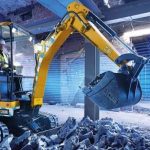

Choosing the right excavator involves balancing machine dimensions with the performance required for the work. Contractors may need equipment that can enter restricted locations while still providing sufficient digging depth, reach, hydraulic capability, and lifting performance. Selecting a machine that is too large can create access problems, while an undersized model may struggle to complete tasks efficiently.
When reviewing electric diggers, buyers should examine size and capacity together rather than treating them as separate specifications. Battery-powered equipment must meet the same practical excavation requirements as other machinery, while its charging arrangements and energy use also influence suitability.
Begin with the Site Dimensions
Before comparing machine models, contractors should establish the dimensions of the work area. This includes entrance width, overhead clearance, turning space, ground conditions, nearby structures, and the available operating footprint.
Transport dimensions may determine whether the machine can enter the site, but the operating configuration requires additional space. The boom, arm, bucket, and tracks need clearance throughout their movement.
A site survey can help identify potential restrictions and establish whether the excavator can be positioned safely. Measurements should be accurate rather than based on visual estimates, particularly where access is narrow or overhead structures are low.
Understand Overall Machine Size
Overall width, length, height, operating weight, and turning characteristics influence how an excavator can be used. These dimensions affect transport, access, positioning, ground pressure, and the space required for excavation.
A compact machine may be easier to manoeuvre within a small work area, but the contractor should also consider stability and ground conditions. Soft ground, slopes, uneven surfaces, and proximity to trenches can affect safe operation.
Buyers should review manufacturer specifications and ensure that the equipment is suitable for the site conditions. Compact dimensions alone do not guarantee safe or effective performance.
Compare Digging Depth and Reach
Digging depth is important when preparing trenches, foundations, drainage routes, or other excavations. However, reach and working geometry are equally relevant.
Contractors should compare maximum digging depth, horizontal reach, dump height, and the machine’s working range. The required dimensions should be established from project drawings and site measurements.
A machine that can dig to the specified depth may still be unsuitable if it cannot reach the excavation area or position the bucket correctly. Buyers should examine the complete specification and consider how the machine will operate throughout the task.
Evaluate Bucket Capacity
Bucket capacity influences how much material can be moved during each digging cycle. The appropriate bucket depends on the soil, excavation dimensions, machine capability, and the intended task.
A larger bucket is not always the best choice. It may increase the load on the machine and could be unsuitable for particular soil conditions or confined excavation areas.
Contractors should select attachments according to manufacturer recommendations. They should also consider the need for different bucket sizes or other approved attachments when the machine is expected to support several applications.
Consider Lifting and Stability
Excavators may be required to lift or reposition materials as part of the work. Buyers should review lifting capability and relevant limits for the machine’s configuration and operating conditions.
Stability is influenced by machine weight, ground conditions, positioning, load, reach, and operating technique. The equipment must be used within its approved limits.
Contractors should pay particular attention to uneven surfaces, slopes, trench edges, and soft ground. Appropriate site assessment and operating procedures are essential.
Review Hydraulic Performance
Hydraulic capability can influence how effectively the machine performs excavation and attachment-related tasks. Buyers should compare hydraulic flow, pressure, auxiliary connections, and compatibility with approved tools.
If the business expects to use attachments, it should confirm that the machine can support them within the manufacturer’s specifications. Attachment selection should consider both performance and the effect on machine stability and energy consumption.
Include Battery and Charging Requirements
Electric machinery introduces additional specifications that affect daily operation. Buyers should review battery capacity, charging method, charger compatibility, expected operating time, and relevant temperature restrictions.
Battery consumption can vary according to digging intensity, soil resistance, travel, hydraulic workload, attachment use, and operator technique. Contractors should establish realistic operating estimates.
Charging access must also be considered. The electrical supply available at the depot or work site may influence whether the machine can support the intended schedule.
Compare Specifications with Real Work
A useful purchasing process begins with a list of common tasks and their requirements. Contractors can then compare machine dimensions, digging performance, hydraulic capability, stability, charging, transport, and cost.
A demonstration or trial on representative ground may provide valuable information. It allows operators to assess the machine’s performance and helps managers understand how the equipment fits into their work programme.
Choosing a Suitable Excavator
The right machine size is determined by the site and workload, not by a single specification. Contractors should balance access, reach, digging depth, capacity, stability, attachments, charging, and ownership costs.
Careful evaluation helps prevent mismatches between equipment and project requirements. It also supports a more informed investment decision, ensuring that electric excavation machinery can perform the tasks expected of it safely and reliably.