
Bearings are essential components in hydroelectric power plants because they support rotating shafts, control mechanical movement, and help maintain stable turbine operation. Depending on the turbine design and operating environment, these bearings may use different lubrication methods to reduce friction and manage heat.
Two commonly considered approaches are water lubrication and oil lubrication. Each has distinct operating characteristics, maintenance requirements, and application considerations. Understanding the differences is important when selecting hydro turbine bearings for specific hydropower installations.
The choice between water-lubricated and oil-lubricated bearings depends on factors such as load capacity, rotational speed, material compatibility, water quality, cooling requirements, and environmental considerations. Neither system is universally better; the appropriate solution depends on the technical requirements of the application.
What Are Water-Lubricated Bearings?
Water-lubricated bearings use water as the lubricating and cooling medium between the shaft and bearing surface. Instead of relying on conventional lubricating oil, these systems are designed with materials that can operate under water-lubricated conditions.
They are used in certain turbine and water-handling applications where exposure to water is part of normal operation.
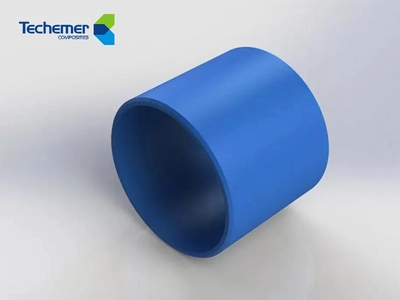
Water-lubricated bearings may use specialized polymer composites, engineered plastics, or other materials selected for compatibility with water and the intended mechanical loads.
How Water-Lubricated Bearings Work
During operation, water enters the bearing interface and helps reduce friction between the moving shaft and the bearing surface.
Depending on the bearing design, water may pass through grooves or channels to support lubrication and remove heat. Some systems operate with boundary or mixed lubrication, while others are designed to develop a hydrodynamic water film under suitable conditions.
Their performance depends on several factors, including:
- Water flow and availability
- Water cleanliness and particle content
- Shaft surface finish
- Bearing material properties
- Operating speed and applied load
- Temperature and operating clearances
The bearing must be specifically designed for the intended water-lubricated environment.
What Are Oil-Lubricated Bearings?
Oil-lubricated bearings use specially selected lubricating oil to separate moving surfaces, reduce friction, and support mechanical loads.
They are widely used in large hydroelectric turbine-generator assemblies, particularly in journal and thrust bearing arrangements.
In hydrodynamic oil-lubricated bearings, shaft rotation draws oil into a converging clearance, creating a pressurized film that supports the load and separates the bearing surfaces.
How Oil-Lubricated Bearings Work
Oil is supplied to the bearing through a lubrication system. Depending on the installation, the system may include pumps, reservoirs, filters, coolers, and distribution passages.
As the shaft rotates, the lubricant film helps prevent direct contact between moving surfaces. The oil also carries heat away from the bearing and may help transport small contaminants toward filtration equipment.
Oil-lubricated systems require suitable lubricant viscosity, adequate oil supply, effective filtration, and appropriate temperature control.
Their performance depends on:
- Lubricant viscosity and quality
- Oil pressure and flow
- Bearing geometry and clearances
- Operating speed and load
- Filtration effectiveness
- Cooling system performance
Proper lubrication management is essential for maintaining reliable operation.
Key Differences Between Water-Lubricated and Oil-Lubricated Bearings
Although both systems reduce friction and support rotating components, their lubrication media create different design and maintenance requirements.
| Comparison Factor | Water-Lubricated Bearings | Oil-Lubricated Bearings | Lubrication medium | Water | Lubricating oil | Cooling | Water can provide cooling | Oil transports heat, often with additional cooling equipment | Material requirements | Must be compatible with water exposure | Must be compatible with lubricant and operating conditions | Lubrication system | May require controlled water supply | Often requires reservoirs, pumps, filters, and distribution equipment | Contamination concerns | Suspended solids and water quality | Water ingress, particles, and oil degradation | Environmental considerations | Can reduce risks associated with oil leakage | Requires appropriate oil containment and leak management | Maintenance focus | Water quality, flow, and bearing surface condition | Oil quality, filtration, pressure, flow, and temperature | Application suitability | Specific water-compatible bearing arrangements | Common in many large turbine-generator bearing systems |
|---|
The exact differences depend on the bearing design and the operating requirements of the hydropower facility.
Advantages of Water-Lubricated Bearings
Water-lubricated systems offer several benefits in applications where suitable materials and operating conditions are available.
1. Reduced Dependence on Lubricating Oil
Because water is used as the lubrication medium, these bearings can reduce or eliminate the need for conventional oil lubrication at the bearing interface.
This can simplify certain installations and reduce dependence on oil handling equipment.
2. Lower Risk of Oil Leakage at the Bearing
In appropriately designed water-lubricated arrangements, the absence of lubricating oil reduces the risk of oil escaping from the bearing lubrication system.
This can be particularly relevant in installations where preventing lubricant discharge into surrounding water is an important environmental consideration.
3. Cooling Capability
Water can absorb and carry away heat generated during bearing operation.
Its effectiveness depends on water flow, temperature, and the thermal characteristics of the bearing materials.
4. Compatibility With Specific Wet Applications
Some bearing arrangements operate in locations where water exposure is unavoidable or where water lubrication is suitable for the mechanical design.
Specialized materials can provide the required wear resistance and dimensional stability under these conditions.
Limitations of Water-Lubricated Bearings
Despite their advantages, water-lubricated bearings require careful engineering and operating control.
Water Quality Requirements
Suspended particles, abrasive materials, and other contaminants can damage bearing surfaces. Water quality must therefore be suitable for the selected bearing material and design.
Material Compatibility
Not every bearing material can operate reliably with water as the lubricant. Material selection must account for water absorption, swelling, corrosion, friction, and wear characteristics.
Lubrication Film Conditions
Water has different viscosity and lubricating properties from conventional bearing oil. Developing and maintaining a suitable film can be more challenging in some operating conditions, particularly at low speeds or during startup.
Load and Speed Restrictions
The load capacity and operating speed of a water-lubricated bearing depend on its design and material properties. The system must be evaluated against the actual turbine requirements.
Advantages of Oil-Lubricated Bearings
Oil lubrication is an established approach in many hydroelectric turbine-generator installations.
1. Effective Load Support
Hydrodynamic oil films can support substantial radial or axial loads when the bearing geometry, operating speed, and lubricant properties are correctly matched.
This makes oil-lubricated designs suitable for many large rotating assemblies.
2. Established Engineering Designs
Oil-lubricated journal and thrust bearings have been used extensively in industrial rotating machinery.
Their operating principles, inspection methods, and maintenance practices are well established.
3. Lubrication and Cooling Functions
Oil helps reduce friction and transport heat away from bearing surfaces.
In systems equipped with suitable cooling and filtration equipment, lubricant conditions can be controlled to support stable operation.
4. Monitoring and Maintenance Options
Oil-lubricated systems provide opportunities for routine oil sampling, particle analysis, viscosity testing, and condition monitoring.
These techniques help maintenance teams identify contamination, lubricant deterioration, and possible wear-related problems.
Limitations of Oil-Lubricated Bearings
Oil lubrication also introduces specific operating and environmental responsibilities.
Oil Leakage Risk
Leaks from seals, pipes, or lubrication equipment may cause lubricant loss and create environmental concerns, particularly in water-related facilities.
Suitable sealing, containment, and inspection arrangements are necessary.
Lubrication System Complexity
Oil-lubricated bearing systems may require pumps, reservoirs, filters, coolers, and monitoring equipment. These components introduce additional maintenance requirements.
Lubricant Degradation
Oil can deteriorate through oxidation, high operating temperatures, and contamination. Regular testing and replacement are necessary to maintain its performance.
Environmental Management
Hydropower facilities must manage oil storage, handling, disposal, and accidental leakage in accordance with applicable environmental requirements.
Applications in Hydropower Systems
The suitability of either lubrication method depends on the location and function of the bearing within the turbine assembly.
Water-Lubricated Guide Bearings
Water-lubricated guide bearings may be used in applications where the bearing is exposed to water and the selected materials can operate reliably in that environment.
They are particularly relevant in certain turbine configurations and water-handling equipment.
Oil-Lubricated Guide Bearings
Oil-lubricated guide bearings are used in many turbine-generator arrangements to maintain radial shaft stability.
They require an appropriate oil supply and must be designed for the expected radial loads, speed, and operating temperature.
Oil-Lubricated Thrust Bearings
Thrust bearings in large hydroelectric generators commonly use hydrodynamic oil lubrication.
Their purpose is to support axial loads generated by the rotating assembly and hydraulic forces while maintaining the required shaft position.
Specialized Bearing Arrangements
Some hydropower systems use different lubrication methods in different parts of the same installation. The choice depends on bearing location, load requirements, water exposure, and the overall mechanical design.
A complete system evaluation is therefore more useful than selecting one lubrication method for every bearing.
Factors to Consider When Choosing Between the Two Systems
Selecting a lubrication method requires an assessment of both technical performance and long-term operating requirements.
1. Load Capacity
Determine the expected radial and axial forces. The selected bearing must support normal operating loads as well as relevant transient conditions.
2. Rotational Speed
Operating speed influences friction, temperature, and lubricant film formation. Bearing materials and lubrication arrangements must be suitable for the required speed range.
3. Water Quality
For water-lubricated systems, evaluate the presence of suspended solids, abrasive particles, and other contaminants. Suitable filtration or water treatment may be necessary.
4. Material Selection
Bearing materials should be compatible with the lubrication medium and capable of withstanding the expected mechanical and environmental conditions.
5. Maintenance Requirements
Compare the inspection, monitoring, and servicing requirements of each system. Consider the availability of maintenance personnel, spare parts, and technical support.
6. Environmental Conditions
Assess the consequences of possible oil leakage, water contamination, and lubricant disposal. Environmental protection requirements may influence the selection.
7. Total Operating Cost
Initial equipment cost is only one part of the decision. Engineers should also consider installation, lubrication infrastructure, energy consumption, maintenance, replacement intervals, and environmental management.
Maintenance Practices for Both Bearing Types
Regardless of the lubrication method, regular maintenance is essential for dependable bearing performance.
For water-lubricated bearings:
- Monitor water supply and flow conditions.
- Check water quality and filtration arrangements.
- Inspect bearing surfaces for scoring and abnormal wear.
- Monitor operating temperature and vibration.
- Verify shaft alignment and bearing clearances.
- Investigate unusual changes in friction or operating noise.
For oil-lubricated bearings:
- Maintain the specified lubricant level and viscosity.
- Perform regular oil sampling and condition analysis.
- Inspect filters, pumps, pipes, and cooling equipment.
- Check for leaks and water contamination.
- Monitor bearing temperature and vibration.
- Inspect bearing surfaces during scheduled maintenance.
Maintenance intervals should follow manufacturer recommendations and reflect actual operating conditions.
Common Mistakes When Selecting a Bearing Lubrication System
Choosing a lubrication method without considering the complete turbine application can create long-term reliability problems.
Common mistakes include:
- Selecting a bearing based only on purchase price
- Ignoring actual radial and axial load requirements
- Using materials that are unsuitable for the lubrication medium
- Overlooking water quality in water-lubricated systems
- Underestimating oil filtration and cooling requirements
- Failing to consider startup and low-speed conditions
- Neglecting environmental protection measures
- Applying generic maintenance intervals without considering operating conditions
A proper engineering assessment helps avoid these issues and supports a more reliable installation.
The Importance of Suitable Bearing Solutions
The performance of a bearing depends on more than its lubrication method. Material properties, manufacturing accuracy, bearing geometry, surface finish, and compatibility with the turbine all influence reliability.
Technical resources from Techemer can help engineers explore industrial bearing applications and evaluate relevant considerations when selecting components for hydropower equipment.
The final decision should be based on verified technical data, manufacturer recommendations, and the operating requirements of the specific turbine system.
Conclusion
Water-lubricated and oil-lubricated bearings both have important roles in hydropower systems. Water-lubricated designs can reduce dependence on conventional lubricating oil and suit selected wet applications, while oil-lubricated bearings offer established solutions for many heavily loaded turbine-generator arrangements.
The right choice depends on load capacity, rotational speed, material compatibility, lubrication conditions, maintenance resources, and environmental requirements.
By evaluating these factors carefully and following appropriate maintenance procedures, hydropower facilities can select suitable bearing arrangements, improve equipment reliability, and support efficient long-term operation.