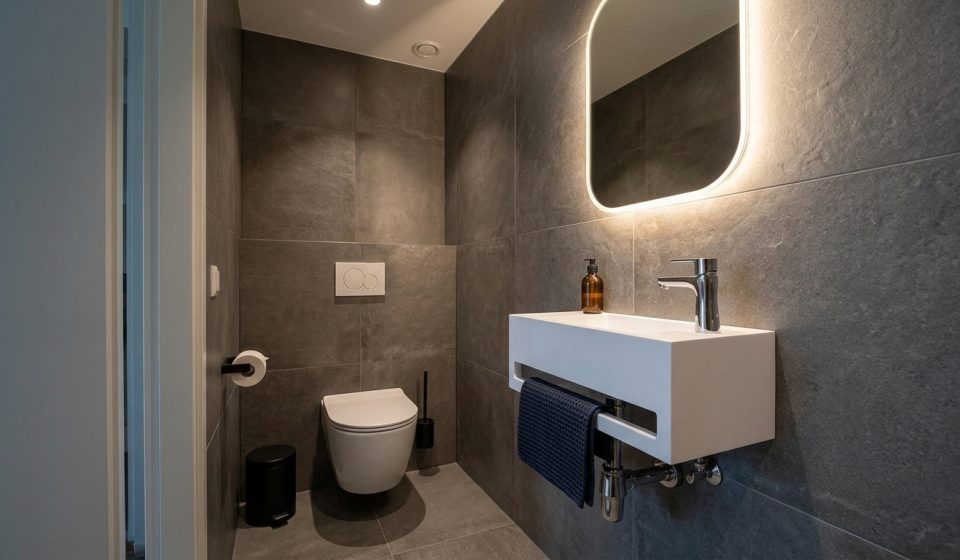

A toilet basin is used repeatedly, often by different members of the household and visiting guests. It needs to withstand regular contact with water, soap, cleaning products, and everyday handling while maintaining an attractive appearance. In a compact room, the fixture also has to fit within strict spatial limits. Selecting a product that combines durability, suitable proportions, and a complementary design can help avoid frequent replacements and installation problems.
When comparing small hand basins for toilets, look beyond the initial appearance. Consider the material, surface finish, bowl construction, mounting method, and quality of the supplied fittings. A durable basin should be appropriate for its intended use, supported by clear product information, and easy to maintain under normal household conditions.
Understand what durability means
Durability is not determined by material name alone. The quality of the finished product, the manufacturing process, installation method, and care routine all contribute to its service life. A well-made basin should have a consistent surface, properly formed edges, and no visible defects that could affect its use.
Ask the supplier for material specifications and relevant product documentation. If the basin is intended for a busy household or commercial setting, explain the expected frequency of use so the supplier can recommend an appropriate option.
Compare common basin materials
Ceramic and glazed vitreous china are widely used in bathrooms because they offer smooth surfaces and familiar cleaning requirements. Their hard finishes are suitable for ordinary residential use when handled and maintained correctly. Solid-surface materials may allow more varied profiles and integrated designs.
Other materials can provide distinctive colors or textures, but their care requirements may differ. Ask whether the finish needs special cleaning products, whether minor damage can be repaired, and how the surface should be protected from staining or abrasion.
Inspect the finish and construction
Before installation, examine the basin under good lighting. Look for chips, cracks, uneven glazing, rough edges, and inconsistencies in color or texture. Pay attention to the waste opening and tap-hole area, as these parts must work with the selected fittings.
Check the underside and mounting points where accessible. A product should be supplied with clear information about its fixing method and support requirements. If the basin is wall-mounted, the installer needs to know how it should be secured to the wall structure.
Balance compact dimensions with usable capacity
A basin can be small externally but still provide a practical bowl if its shape is designed efficiently. Check the internal width and depth, not just the overall footprint. The bowl should allow enough room for hands and direct water toward the waste outlet.
A very shallow profile may look streamlined but can increase splashing. Consider the tap at the same time: its height and spout reach affect how water enters the bowl. The basin and tap should be treated as a compatible combination.
Choose a mounting style that suits the room
Wall-mounted models can preserve floor access and reduce visual bulk. Vanity-supported basins provide storage and conceal some pipework, while corner designs can use difficult areas efficiently. Each arrangement has different structural and plumbing requirements.
Confirm the wall support, countertop strength, cabinet clearance, and finished installation height. A durable basin can still perform poorly if it is incorrectly supported or installed with unsuitable fittings.
Protect the surface through proper care
Use cleaning products recommended by the manufacturer. Avoid assuming that strong chemicals or abrasive pads are suitable for every finish. Regularly wipe away soap residue and water deposits, and inspect the joints around the basin for signs of deterioration.
The waste fitting and trap should remain accessible for cleaning and maintenance. If a leak or loose fixing develops, address it promptly rather than allowing water to affect nearby cabinetry or wall finishes.
Evaluate the supplier as well as the product
Check that the supplier provides accurate measurements, installation instructions, material details, warranty terms, and guidance for reporting transport damage. Confirm whether the tap, waste assembly, and mounting hardware are included. Reliable product information makes it easier to plan installation and maintain the fixture correctly.
A durable choice should remain attractive
A suitable toilet basin combines sound construction with a finish that complements the interior. By checking material quality, bowl proportions, installation requirements, and care guidance, buyers can select a fixture that supports regular use while retaining a neat, stylish appearance.