How to Choose the Right Insulation Material for Better Energy Savings and Building Performance

Choosing suitable insulation is an important part of creating energy-efficient, comfortable, and durable buildings. Insulation helps regulate indoor temperatures by slowing heat transfer through walls, roofs, floors, pipes, and other building components. When selected correctly, it can reduce heating and cooling demands, improve indoor comfort, and support the long-term performance of a building.
However, not every Insulation Material is suitable for every application. Different products have different thermal properties, moisture resistance, fire performance, and installation requirements. Understanding these differences allows property owners, architects, engineers, and contractors to make decisions based on actual building needs rather than price or product type alone.
Why Insulation Matters for Building Performance
Buildings constantly exchange heat with their surrounding environments. During colder months, indoor heat can escape through poorly insulated surfaces, while in warmer conditions, external heat can enter the building.
Insulation reduces this transfer, helping maintain more stable indoor temperatures. As a result, heating and air conditioning systems may operate less frequently or with lower energy demand.
Beyond energy savings, a properly designed insulation system can also improve occupant comfort, reduce temperature fluctuations, and help prevent condensation in suitable applications.
Understand the Different Types of Insulation Materials
The first step in selecting insulation is understanding the main product categories and their characteristics. Each type is designed for particular environments and performance requirements.
1. Fibreglass Insulation
Fibreglass insulation is manufactured using fine glass fibres and is commonly supplied in batts, rolls, and loose-fill forms.
It is widely used in residential and commercial buildings because it provides thermal resistance and can fit into wall cavities, roof spaces, and ceilings.
Its effectiveness depends on correct installation. Gaps, compression, or poorly fitted sections can reduce overall performance.
2. Mineral Wool Insulation
Mineral wool is generally produced from molten rock or industrial mineral materials. It is available in several forms, including slabs, batts, and pipe sections.
It offers useful thermal and acoustic properties and is often selected where fire performance is an important consideration.
The specific fire classification and temperature limits should always be checked against the manufacturer’s technical documentation.
3. Rigid Foam Insulation
Rigid foam insulation products are available in different formulations, including expanded polystyrene, extruded polystyrene, and polyisocyanurate.
They are commonly used in roofs, floors, external walls, and other applications requiring effective thermal resistance in relatively limited thicknesses.
Their moisture behaviour, fire performance, and suitability for particular construction assemblies vary by product.
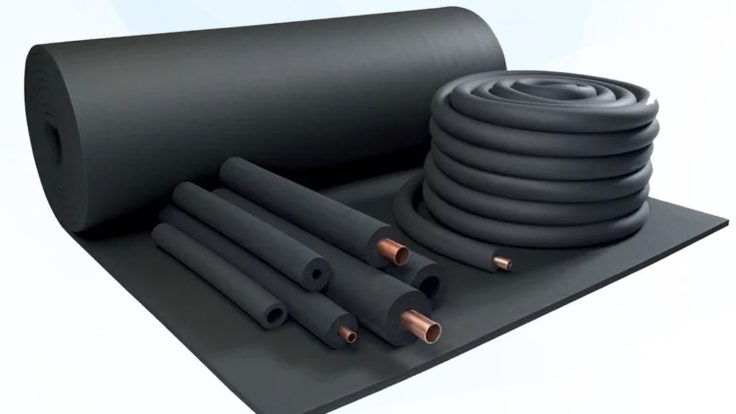
4. Flexible Elastomeric Foam
Flexible elastomeric insulation is commonly used in heating, ventilation, air conditioning, and refrigeration systems.
Its closed-cell structure helps reduce heat transfer and can provide resistance to water vapour movement when correctly installed with sealed joints.
It is particularly useful for insulating pipes, ducts, and mechanical equipment where flexibility and condensation control are important.
5. Cellulose Insulation
Cellulose insulation is typically manufactured using processed recycled paper products treated with additives for fire and pest resistance.
It is commonly installed as loose-fill material in roof spaces and selected wall cavities.
Its performance depends on installation density, moisture management, and the condition of the surrounding building components.
Key Factors to Consider When Choosing Insulation
Selecting insulation requires a balanced assessment of thermal performance, environmental conditions, safety, and installation requirements.
Thermal Conductivity and R-Value
Thermal conductivity indicates how easily heat passes through a material. Lower conductivity generally means better resistance to heat transfer for the same thickness.
R-value describes resistance to heat flow, with higher values indicating greater thermal resistance. The R-value of an insulation layer depends on its material properties and thickness.
When comparing products, make sure the figures refer to consistent test conditions and product configurations.
Moisture Resistance
Moisture can reduce insulation effectiveness and contribute to mould growth, corrosion, and deterioration of surrounding building components.
In areas exposed to humidity or condensation, the insulation system should be selected with careful attention to water absorption and water vapour transmission.
For example, closed-cell elastomeric foam is frequently used on chilled water and refrigeration pipework because it helps control condensation when joints and seams are properly sealed.
Fire Performance
Fire safety should be considered during the early stages of material selection.
Different insulation products have different reactions to fire, smoke production, and temperature limits. A product’s fire classification should be verified through relevant test reports rather than assumed from its material category.
The complete construction assembly may also require assessment because facings, adhesives, coatings, and installation details can influence fire performance.
Acoustic Performance
Some insulation materials can help reduce airborne sound transmission or absorb noise within building assemblies.
Mineral wool and certain fibrous products are often used in partitions, ceilings, and wall cavities for acoustic purposes.
If noise control is a priority, review the relevant acoustic performance data instead of relying solely on thermal specifications.
Durability and Maintenance
Insulation should retain its intended performance throughout the expected service life of the building or system.
Consider whether the material may be exposed to vibration, physical damage, ultraviolet radiation, chemicals, or repeated temperature changes.
Accessible insulation systems should also allow practical inspection and repair when required.
Match the Insulation to the Building Application
The best insulation choice depends heavily on where and how it will be installed.
Roofs and Attics
Roofs and attic spaces can account for substantial heat transfer, particularly when insulation is inadequate.
Suitable products may include mineral wool, fibreglass, cellulose, or rigid foam, depending on the roof design and ventilation strategy.
The selected system should address thermal performance while managing moisture and avoiding unwanted obstruction of ventilation pathways.
External and Internal Walls
Wall insulation helps reduce heat transfer between indoor spaces and the outdoor environment.
Rigid boards, mineral wool, fibreglass, and other cavity insulation products may be appropriate depending on whether the project uses cavity walls, internal lining, or external insulation.
Careful detailing around windows, doors, structural connections, and service penetrations is essential to minimise thermal bridging.
Floors
Insulating floors can improve comfort and reduce heat loss, especially where floors are exposed to unheated spaces or the ground.
Rigid insulation boards are commonly considered for suitable floor constructions. Product compressive strength and moisture resistance should be checked where the insulation will support loads or contact damp environments.
HVAC and Refrigeration Systems
Mechanical systems require insulation suited to the temperature and operating conditions of the equipment.
Flexible elastomeric foam is frequently used for chilled water pipes, refrigerant lines, and air conditioning components. Hot-water and heating applications may require different products with appropriate temperature ratings.
Correct thickness, joint sealing, and vapour control are especially important in systems operating below the surrounding air’s dew point.
How Insulation Contributes to Energy Savings
Insulation reduces the rate at which heat enters or leaves a building. This can lower the workload placed on heating and cooling equipment.
When the building envelope performs effectively, indoor temperatures remain more stable, and HVAC systems may use less energy to maintain the desired conditions.
The actual savings depend on several factors, including climate, building design, existing insulation levels, air leakage, occupancy patterns, and equipment efficiency.
Insulation should therefore be considered as part of a wider energy-efficiency strategy that also addresses ventilation, airtightness, glazing, and heating and cooling controls.
Common Mistakes to Avoid When Selecting Insulation
Even a high-performance product may deliver disappointing results if it is unsuitable for the application or installed incorrectly.
Some common mistakes include:
- Choosing products based only on their purchase price.
- Ignoring the operating temperature and environmental conditions.
- Selecting insulation without checking moisture and condensation risks.
- Compressing products that require a specific installed thickness.
- Leaving gaps around joints, corners, and service penetrations.
- Overlooking fire classifications and relevant building regulations.
- Assuming that one insulation type is suitable for every part of a building.
Avoiding these issues helps improve the reliability and effectiveness of the overall insulation system.
The Importance of Professional Installation
Installation quality has a direct impact on insulation performance.
Incorrect cutting, poor joint sealing, compression, and incomplete coverage can create weak points where heat transfer occurs more easily.
Professional installers can assess the building structure, identify potential thermal bridges, and select appropriate installation methods for different materials.
They can also help ensure that insulation does not interfere with ventilation, drainage, electrical installations, or other essential building services.
For complex projects, consulting an energy assessor or building performance specialist can help identify the areas where insulation improvements will provide the greatest benefit.
Conclusion
Choosing the right insulation involves more than comparing product types or advertised thermal values. Building design, climate, moisture exposure, fire requirements, acoustic needs, and installation conditions all influence which solution will perform effectively.
By matching insulation properties to the intended application and following appropriate installation practices, building professionals and property owners can reduce unnecessary energy losses, improve indoor comfort, and support long-term building performance.
A carefully selected and properly installed insulation system is therefore an important investment in energy efficiency, building durability, and occupant comfort.