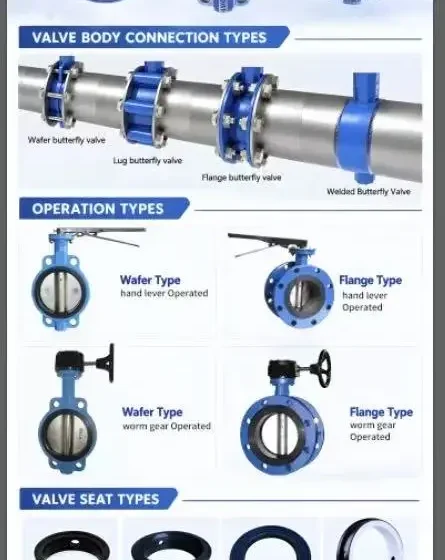

Valve selection often involves balancing installation requirements, operational performance, material compatibility, and maintenance access. In industrial piping, a valve must do more than fit between two pipes; it needs to perform the intended function under the system’s pressure, temperature, and flow conditions. Connection style can also influence how the valve is installed, supported, and removed during maintenance.
A PTFE Coated Lug Butterfly Valve may be suitable for selected installations where lug-style connections and PTFE-related internal components are required. Lug designs typically incorporate threaded or otherwise configured attachment points around the valve body, depending on the manufacturer’s construction. Buyers should confirm the exact connection arrangement, coating or lining details, and whether the valve is suitable for the intended pipeline configuration.
What Defines a Lug Butterfly Valve?
Lug butterfly valves are designed with connection features around the body that allow the valve to be attached to the pipeline flanges using the specified fasteners. The exact arrangement varies by manufacturer and model.
Some lug-style designs may allow a section of pipeline to be disconnected on one side while the valve remains attached to the other, but this capability depends on the valve’s pressure rating, design, installation arrangement, and whether the manufacturer permits such service. It should not be assumed that every lug butterfly valve supports end-of-line operation.
The connection design should be reviewed alongside the valve’s dimensions, body construction, and intended application.
Understanding the PTFE Surface
PTFE is known for its resistance to many chemicals and its relatively low friction. It can be used in different valve components, including seats, liners, or other surfaces, depending on the product design.
The term “coated” should be checked carefully. A PTFE coating, a PTFE lining, and a PTFE seat may have different constructions and functions. The supplier should provide documentation identifying the material and its location within the valve.
For chemical applications, compatibility depends on the specific fluid and operating conditions. The process temperature, pressure, concentration, and any cleaning chemicals should be included in the assessment.
Establish the Valve’s Intended Function
Before selecting a lug butterfly valve, determine whether it is intended for isolation, flow regulation, or another specific duty. The design must be suitable for the function required.
Butterfly valves operate through disc rotation. Their flow characteristics change as the disc position changes, so a valve intended for frequent throttling should be assessed accordingly.
For isolation applications, the buyer should confirm the required shutoff performance, pressure rating, and seat design. The product’s specified leakage criteria should be reviewed rather than assumed.
Connection Compatibility and Installation
Lug-style valves require compatible flange dimensions and fasteners. The installer should confirm the connection arrangement, bolt specifications, flange type, and any requirements for gaskets or clearances.
The valve should be aligned correctly within the pipeline. Improper alignment or excessive tightening may create mechanical stresses that affect the body or sealing components.
Before installation, inspect the valve for transport damage and protect the internal surfaces from contamination. The disc should be positioned as directed by the manufacturer to avoid interference during fitting.
Consider Operating Conditions
Industrial valves may experience pressure changes, temperature variations, vibration, and repeated operation. These factors can affect valve performance over time.
The engineer should establish the normal and maximum operating conditions, including any unusual situations that may occur during startup, shutdown, or cleaning. The valve’s pressure-temperature limits must be suitable for the full operating range.
If the system handles corrosive or abrasive fluids, material compatibility and potential wear should receive particular attention. PTFE-related components may provide chemical resistance in suitable applications, but they are not a universal solution for every fluid or condition.
Maintenance and Inspection Requirements
A lug butterfly valve should be accessible for routine inspection and maintenance. The installation should provide sufficient room for operating the handle or actuator, checking the connection points, and removing components if required.
Inspection should include external leakage, corrosion, valve movement, and signs of damage. If operating resistance changes noticeably, the cause should be investigated before applying additional force.
Maintenance procedures should protect the PTFE-related surfaces and follow the manufacturer’s recommendations. Replacement components must be compatible with the original design.
Evaluate the Complete Product Specification
Buyers should compare body material, disc material, pressure rating, connection dimensions, lining or coating details, operating mechanism, and available accessories. Technical drawings and material information are useful when reviewing compatibility with an existing pipeline.
The supplier should also provide guidance on installation, testing, operating limitations, and maintenance.
Make the Selection Based on Service Requirements
A PTFE-coated or PTFE-equipped lug butterfly valve can be useful in industrial flow-management systems when its construction meets the process requirements. Its connection style may support particular installation or maintenance arrangements, but suitability must be confirmed for the actual pipeline.
A careful evaluation of material compatibility, connection design, pressure limits, shutoff requirements, and service accessibility helps ensure that the selected valve is appropriate for its intended duty.