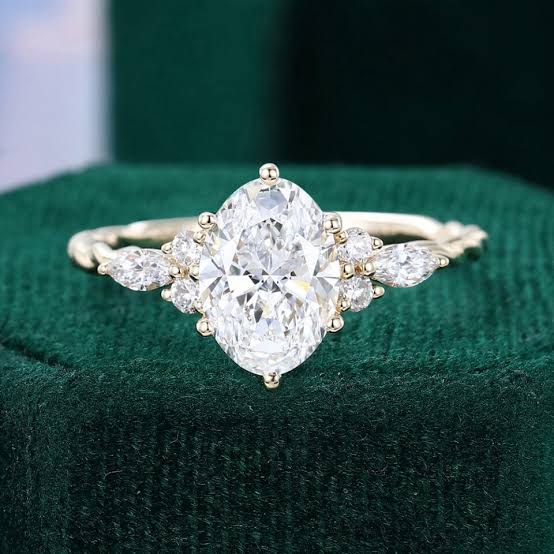

Choosing between a lab-grown diamond and a natural diamond can be challenging, especially for buyers who are unfamiliar with modern diamond jewelry. Both options offer exceptional brilliance, durability, and beauty, but they differ in how they are formed, their market prices, and their overall value.
As diamond technology continues to develop, more consumers are exploring alternatives to traditionally mined gemstones. Understanding the characteristics of a Lab Diamond Ring can help buyers compare their options and determine which type of diamond best matches their preferences, budget, and expectations.
What Is a Lab-Grown Diamond?
A lab-grown diamond is a real diamond created in a controlled laboratory environment using advanced technological processes. It has essentially the same chemical composition, crystal structure, and physical properties as a natural diamond.
These diamonds are primarily manufactured using two methods: High Pressure High Temperature (HPHT) and Chemical Vapor Deposition (CVD). Both techniques allow carbon atoms to develop into diamond crystals under carefully controlled conditions.
Lab-grown diamonds are not the same as imitation gemstones. Materials such as cubic zirconia and moissanite may resemble diamonds, but they have different chemical and physical properties.
What Is a Natural Diamond?
A natural diamond is a gemstone formed through geological processes deep within the Earth’s mantle. Natural diamonds develop under extremely high temperatures and pressures over periods that can extend to billions of years.
Volcanic activity eventually brings diamond-bearing rocks closer to the Earth’s surface, where diamonds can be discovered and extracted through mining operations.
After extraction, rough diamonds are cut, polished, graded, and prepared for use in jewelry. Their natural origin and geological history are important factors in how they are valued and perceived in the jewelry market.
Lab Diamond Ring vs. Natural Diamond Ring: Main Differences
Although both types of diamonds share many essential characteristics, several differences are worth considering before making a purchase.
| Comparison Factor | Lab-Grown Diamond | Natural Diamond |
|---|---|---|
| Formation | Created in a laboratory | Formed naturally underground |
| Chemical composition | Crystallized carbon | Crystallized carbon |
| Hardness | 10 on the Mohs scale | 10 on the Mohs scale |
| Appearance | Similar brilliance and sparkle | Similar brilliance and sparkle |
| Price | Generally more affordable | Generally more expensive |
| Availability | Produced through controlled processes | Depends on natural deposits and mining |
| Identification | Requires specialized testing | Requires specialized testing |
| Market perception | Modern diamond alternative | Traditional and established gemstone |
| Environmental impact | Depends on energy and manufacturing practices | Depends on mining and supply-chain practices |
These differences demonstrate that the main distinction is not whether one is a real diamond and the other is not. Both are genuine diamonds, but their origins and commercial characteristics are different.
1. Differences in Formation and Origin
The most fundamental difference between lab-grown and natural diamonds is how they are created.
How Lab-Grown Diamonds Are Formed
Laboratory diamonds are produced using specialized equipment that recreates the conditions necessary for diamond growth.
The two main production methods include:
- HPHT method: Uses high pressure and high temperature to encourage carbon atoms to crystallize around a diamond seed.
- CVD method: Uses carbon-containing gases in a controlled chamber to deposit carbon atoms onto a diamond seed, gradually developing a larger crystal.
Depending on the method and production conditions, a gem-quality diamond can typically be grown much faster than a natural diamond forms.
How Natural Diamonds Are Formed
Natural diamonds develop deep within the Earth under intense pressure and temperature. Their formation involves geological processes that take extremely long periods.
Once brought closer to the surface through volcanic activity, they can be recovered from diamond-bearing deposits.
Their natural formation gives them a geological history that distinguishes them from laboratory-created stones.
2. Appearance and Brilliance
Many buyers assume that natural diamonds look more brilliant than lab-grown alternatives. However, this is not necessarily true.
Lab-grown and natural diamonds have essentially the same optical properties. Both can reflect and disperse light beautifully when properly cut and polished.
The brilliance of a diamond depends primarily on its cut quality, proportions, symmetry, and polish rather than its origin.
For example, a well-cut lab-grown diamond can display excellent sparkle, while a poorly cut natural diamond may appear less lively.
Both options are available in popular shapes, including:
- Round brilliant
- Oval
- Princess
- Emerald
- Pear
- Cushion
- Radiant
Therefore, buyers should evaluate the individual diamond rather than assuming that one origin automatically guarantees better visual quality.
3. Price and Affordability
Price is one of the most noticeable differences between lab-grown and natural diamond rings.
Lab-grown diamonds generally cost less because their production can be increased through controlled manufacturing processes. Their market prices are influenced by production capacity, technological developments, and changing consumer demand.
Natural diamonds, on the other hand, depend on geological supply, mining operations, distribution networks, and established market demand.
Why Are Lab-Grown Diamonds More Affordable?
Several factors contribute to the lower prices of laboratory-grown diamonds:
- Controlled production makes supply more scalable.
- Technological improvements can increase manufacturing efficiency.
- Buyers have access to a wider selection of sizes and quality combinations.
- Market competition influences retail pricing.
This price difference allows consumers to consider larger stones or different design features within a limited budget.
However, prices vary between individual diamonds, retailers, and jewelry settings. Buyers should compare actual specifications rather than relying on general price assumptions.
4. Durability and Everyday Wear
Durability is another important consideration when choosing a diamond ring.
Both lab-grown and natural diamonds have a hardness of 10 on the Mohs scale, making them the hardest naturally occurring mineral material and highly resistant to scratching.
This makes both suitable for engagement rings, wedding jewelry, and other pieces intended for frequent use.
However, hardness should not be confused with resistance to every type of damage. Diamonds can still chip or fracture when subjected to strong impacts, particularly around certain edges and corners.
The durability of the complete ring also depends on the quality of its metal setting, prongs, and overall construction.
Regular inspections and proper handling help maintain both types of diamond jewelry.
5. Environmental Considerations
Environmental impact is an increasingly important factor for modern jewelry buyers.
Lab-grown diamonds avoid the need for traditional diamond mining during their production. However, their manufacturing processes require energy, specialized equipment, and other resources.
The overall environmental footprint depends on the electricity source, production efficiency, transportation, and manufacturing practices.
Natural diamond mining can involve land disturbance, water consumption, energy use, and changes to local ecosystems. However, environmental management practices differ between mining operations.
Neither option should automatically be considered environmentally harmless. Buyers interested in sustainability should examine transparent sourcing information, manufacturing practices, and independently supported environmental claims.
6. Certification and Identification
Both lab-grown and natural diamonds can be examined by professional gemological laboratories. However, their origin must be clearly identified.
Because their visual and physical characteristics are so similar, distinguishing between them usually requires specialized equipment and scientific analysis.
Organizations such as the Gemological Institute of America (GIA) provide diamond identification and assessment services.
When purchasing either type of diamond, buyers should review the accompanying documentation carefully.
Important details to check include:
- Diamond origin and identification
- Carat weight
- Color characteristics
- Clarity characteristics
- Cut quality or assessment
- Report number and laser inscription, where applicable
A reliable grading or identification report helps buyers understand what they are purchasing and reduces the risk of confusion between different diamond categories.
7. Resale Value and Long-Term Investment
Resale value is another area where lab-grown and natural diamonds differ.
Natural diamonds have an established secondary market, although their resale prices are not guaranteed and are often significantly lower than their original retail prices.
Lab-grown diamonds generally experience greater price pressure because production technology continues to develop and manufacturing capacity can expand. As a result, their resale values are often lower and less predictable.
Buyers should understand that neither type of diamond ring should automatically be treated as a financial investment.
For most consumers, diamond jewelry is primarily a personal purchase associated with style, celebrations, and sentimental value. Anyone considering future resale should research the secondary market before making a decision.
8. Design Options and Customization
Both lab-grown and natural diamonds offer extensive design possibilities.
Buyers can select different diamond shapes, carat weights, metal types, and settings to create jewelry that reflects their personal style.
Popular ring designs include:
Solitaire Settings: Feature one central diamond and emphasize its shape and brilliance.
Halo Settings: Surround the main diamond with smaller stones to create additional sparkle.
Three-Stone Settings: Combine three diamonds in a design often associated with past, present, and future.
Pavé Settings: Use small diamonds along the band to create a continuous sparkling appearance.
Vintage-Inspired Designs: Incorporate decorative details, intricate metalwork, and traditional styling.
The choice between lab-grown and natural diamonds does not significantly limit the available design styles. Both can be used in classic, modern, and customized jewelry.
Which Diamond Ring Should You Choose?
The right option depends on what matters most to the buyer. There is no universal answer because individual preferences, financial considerations, and personal values differ.
Choose a Lab-Grown Diamond Ring If:
- You want a genuine diamond at a generally lower purchase price.
- You prefer having more flexibility in diamond size and specifications within your budget.
- You appreciate modern manufacturing technology.
- You are less concerned about the gemstone having a natural geological origin.
- You prioritize appearance and personal design preferences over traditional market perception.
Choose a Natural Diamond Ring If:
- You value the natural geological origin of gemstones.
- You appreciate the rarity and history associated with naturally formed diamonds.
- You prefer traditional diamond jewelry.
- You are comfortable with the generally higher purchase price.
- Natural origin is an important part of the ring’s sentimental meaning.
Comparing these priorities can help buyers make a decision that feels appropriate for their lifestyle and expectations.
Common Myths About Lab-Grown and Natural Diamonds
Several misconceptions can make it difficult for first-time buyers to understand the differences between these diamond categories.
Myth 1: Lab-Grown Diamonds Are Fake
This is incorrect. Lab-grown diamonds are genuine diamonds with essentially the same chemical composition and crystal structure as natural diamonds. They are different from imitation stones.
Myth 2: Natural Diamonds Always Have Better Sparkle
Diamond brilliance depends primarily on cut quality and proportions. A well-cut lab-grown diamond can display the same impressive light performance as a comparable natural diamond.
Myth 3: Lab-Grown Diamonds Are Not Durable
Both types have the same hardness rating on the Mohs scale. Their suitability for everyday wear is also influenced by the setting and how the jewelry is handled.
Myth 4: Buyers Can Easily Identify Their Origin by Looking
In most cases, visual inspection alone is not sufficient to distinguish a lab-grown diamond from a natural one. Professional gemological testing is needed for reliable identification.
Myth 5: Natural Diamonds Always Have Strong Resale Value
Although natural diamonds have an established resale market, their secondhand prices can be substantially lower than their original retail prices. Resale value depends on multiple market and quality factors.
Final Thoughts
The comparison between lab-grown and natural diamond rings comes down to origin, price, market perception, and personal priorities. Both are genuine diamonds with similar chemical, physical, and optical properties, making them attractive choices for different types of jewelry buyers.
Lab-grown diamonds offer affordability and design flexibility, while natural diamonds appeal to people who value geological rarity and traditional gemstone origins.
Before making a purchase, compare diamond quality, certification, setting craftsmanship, pricing, and long-term expectations. Understanding these factors will help you select a diamond ring that matches your preferences and represents a meaningful purchase.