Hurricanes can leave homes without electricity for extended periods, making backup power an essential part of emergency preparedness. However, choosing the right battery capacity isn’t always straightforward. A backup system that’s too small may not keep critical devices running, while one that’s too large could exceed your actual needs.
Calculating your home’s backup power requirements starts with understanding your daily energy usage and prioritizing essential appliances. For a more detailed explanation of battery sizing and emergency planning, the Hurricane Backup Power Capacity Guide offers practical guidance on determining the appropriate backup capacity for different household situations.
Battery capacity is measured in watt-hours (Wh), which indicates how much electricity a battery can store. The larger the capacity, the longer your backup power station can operate connected devices before requiring a recharge.
Selecting the correct capacity helps ensure that your essential electronics continue functioning throughout a power outage without unnecessary overspending on excess storage.
Step 1: List Your Essential Devices
Begin by identifying the appliances and electronics you need during a hurricane-related outage. Focus on equipment that supports safety, communication, and basic comfort.
Typical essentials include:
Smartphones
Wi-Fi router
LED lights
Laptop
Emergency radio
Portable refrigerator
Medical equipment
Small fan
This list serves as the foundation for estimating your overall energy requirements.
Step 2: Check Power Consumption
Each device has a power rating, usually listed in watts (W) on its label or user manual. Knowing this value allows you to estimate how much electricity each item uses.
For example:
Device
Typical Power Usage
Smartphone charger
5–20 W
LED light
5–15 W
Wi-Fi router
10–20 W
Laptop
40–100 W
Portable refrigerator
50–100 W
CPAP machine
30–90 W
Actual power consumption may vary depending on the model and usage.
Step 3: Estimate Daily Runtime
Next, estimate how many hours each device will operate during a typical day without electricity.
For example:
Smartphone charging: 2 hours
Wi-Fi router: 24 hours
LED lighting: 6 hours
Laptop: 4 hours
Portable refrigerator: Runs throughout the day with cycling compressor operation
These estimates help calculate the total daily energy requirement.
Step 4: Calculate Total Energy Usage
Multiply each device’s wattage by the number of hours it will operate.
Formula:
Watts × Hours = Watt-hours (Wh)
For example:
LED light: 10 W × 6 hours = 60 Wh
Laptop: 60 W × 4 hours = 240 Wh
Wi-Fi router: 15 W × 24 hours = 360 Wh
Add the watt-hour values for all essential devices to estimate your total daily energy requirement.
Step 5: Add a Safety Margin
Unexpected situations often increase energy usage during emergencies. Choosing a battery with additional capacity helps account for:
Longer outages
Extra device charging
Reduced battery efficiency over time
Future equipment needs
A reasonable safety margin provides greater flexibility without significantly increasing complexity.
Consider Recharging Options
Backup batteries become even more practical when they support multiple charging methods.
Common options include:
Wall outlet charging before the storm.
Vehicle charging after evacuation or while traveling.
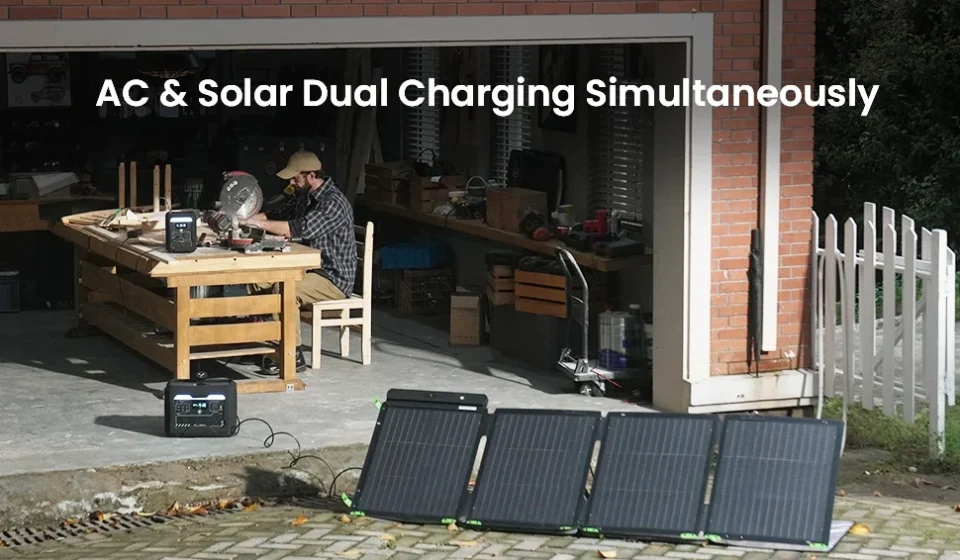
Solar panel charging during extended outages.
Multiple charging methods help maintain backup power when grid electricity remains unavailable.
Prioritize Battery Safety Features
A dependable backup power system should include built-in protection technologies.
Look for features such as:
Overcharge protection
Short-circuit protection
Overload protection
Temperature monitoring
Battery Management System (BMS)
These systems help improve reliability while protecting connected electronics.
Prepare Before Hurricane Season
Calculating the right battery capacity is only one part of emergency planning. Preparing your equipment before severe weather arrives is equally important.
Consider this simple checklist:
Fully charge your backup battery.
Test essential devices in advance.
Store charging cables together.
Keep emergency lighting readily available.
Recharge the battery periodically during storage.
Being prepared before hurricane season begins reduces stress when power outages occur.
Final Thoughts
Determining the right hurricane backup power capacity doesn’t have to be complicated. By listing your essential devices, calculating their daily energy usage, estimating runtime, and adding a reasonable safety margin, you can choose a backup power solution that meets your household’s needs.
With proper planning and the right battery capacity, you’ll be better equipped to keep important devices running and maintain greater comfort and safety during hurricane-related power outages.