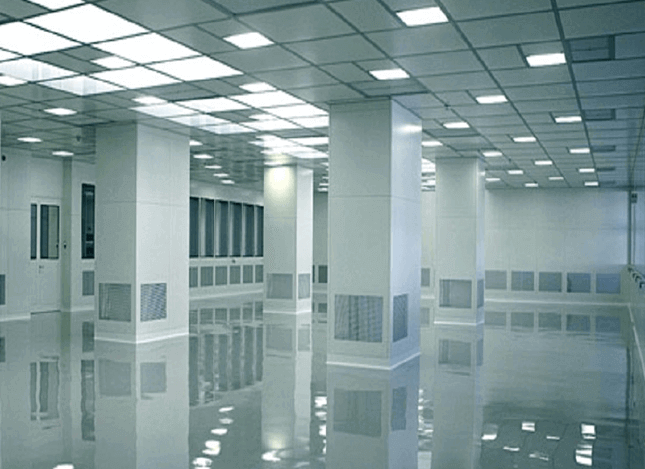

High-tech manufacturing industries operate in environments where even the smallest contamination can lead to product failure, performance issues, or costly recalls. Sectors such as semiconductors, microelectronics, aerospace engineering, and advanced medical devices all depend on extremely controlled production environments to maintain precision and consistency. As product designs become more complex and tolerances become tighter, the need for reliable cleanroom infrastructure continues to grow.
To meet these demands efficiently, manufacturers are increasingly adopting integrated project delivery methods rather than managing multiple contractors separately. This shift has made the fully managed cleanroom approach more attractive, especially when speed, compliance, and technical accuracy are critical. A Turnkey Cleanroom provides a single-source solution where design, engineering, construction, installation, and validation are all handled under one coordinated system. This eliminates fragmentation and ensures that every stage of development is aligned with high-tech manufacturing requirements.
Table of Contents
ToggleIncreasing Demand for Precision-Controlled Environments
High-tech manufacturing is defined by extremely tight tolerances and advanced production processes. In semiconductor fabrication, for example, particles invisible to the human eye can damage entire wafers. Similarly, optical systems, nanotechnology components, and precision sensors all require contamination-free conditions to function correctly.
Because of these challenges, cleanroom environments must deliver:
- Ultra-low particle concentration levels
- Stable temperature and humidity control
- Electrostatic discharge protection
- Highly controlled airflow patterns
Any inconsistency in these parameters can significantly impact yield rates and product quality, making environmental control a top priority.
Integrated Project Delivery Reduces Engineering Complexity
One of the main reasons turnkey systems are widely used in high-tech manufacturing is the reduction of engineering complexity. Traditional cleanroom construction often involves multiple vendors handling HVAC systems, architectural design, electrical installations, and validation separately. This fragmented approach increases the risk of misalignment and delays.
By contrast, turnkey delivery consolidates all responsibilities into a single coordinated process. This ensures that all systems are designed to work together from the beginning, reducing the risk of incompatibility.
Key benefits include:
- Unified engineering coordination across disciplines
- Reduced design conflicts and rework
- Faster communication between project stages
- Improved system integration and performance consistency
This level of coordination is particularly important in high-tech environments where precision is critical.
Faster Project Execution and Market Readiness
In competitive high-tech industries, time-to-market is a major factor in business success. Delays in facility construction can directly impact production schedules and revenue generation. Traditional multi-contractor projects often face scheduling inefficiencies due to lack of coordination.
Turnkey cleanroom projects streamline execution by aligning all phases under a single timeline. Design, fabrication, and installation can proceed in parallel, significantly reducing overall project duration.
This leads to:
- Shorter facility delivery timelines
- Faster production ramp-up
- Reduced operational downtime
- Improved competitiveness in fast-moving markets
For industries such as semiconductor manufacturing, where product cycles evolve rapidly, this advantage is especially valuable.
Advanced Environmental Control Systems
High-tech manufacturing requires extremely stable and precisely controlled environments. Turnkey cleanroom systems are designed with integrated HVAC and filtration technologies that ensure consistent performance across all operational conditions.
These systems typically include:
- HEPA and ULPA filtration for ultra-clean air supply
- Precision airflow management systems
- Pressure differential control between clean zones
- Real-time environmental monitoring and adjustment
Because all systems are engineered together, performance stability is significantly improved compared to fragmented installations.
Higher Quality Control and System Reliability
Quality control is essential in high-tech manufacturing, where even minor defects can lead to significant financial losses. Turnkey cleanrooms ensure consistent quality by managing every stage of production under a unified quality assurance framework.
This includes:
- Controlled manufacturing of modular cleanroom components
- Factory testing before on-site delivery
- Standardized installation procedures
- Continuous inspection during construction
This structured approach ensures that all components meet strict performance and compliance standards before becoming operational.
Simplified Compliance and Certification Process
High-tech industries must comply with strict international standards, including ISO classifications and industry-specific regulations. Managing compliance across multiple contractors can create documentation gaps and increase audit risks.
Turnkey delivery simplifies compliance by integrating it into every stage of the project lifecycle. Documentation and validation are handled systematically, ensuring smooth certification processes.
Typical compliance steps include:
- Installation Qualification (IQ)
- Operational Qualification (OQ)
- Performance Qualification (PQ)
- Environmental and particle monitoring
This ensures that the facility meets regulatory expectations and is ready for inspection without delays.
Flexibility and Future Scalability
High-tech manufacturing environments often need to expand or upgrade as technology evolves. Turnkey cleanroom systems are designed with modularity and flexibility, making future expansion more efficient and cost-effective.
Benefits of this scalability include:
- Modular construction for easy expansion
- Minimal disruption during upgrades
- Adaptability to new manufacturing technologies
- Reduced long-term infrastructure costs
This ensures that facilities remain future-ready in rapidly changing industries.
Conclusion
Turnkey cleanrooms have become a preferred solution in high-tech manufacturing due to their ability to deliver precision, speed, and reliability within highly controlled environments. By integrating all project phases into a single coordinated system, they eliminate complexity while improving performance and compliance.
As high-tech industries continue to advance, the demand for efficient, scalable, and highly controlled production environments will only increase, making turnkey solutions an essential part of modern manufacturing infrastructure.